

Eighty years after WWII, Solomon Islanders face the ongoing threat of death and injury from hidden, unexploded bombs, writesCatherine Wilson.
THIS YEAR is the80thanniversaryof the end of the Second World War, but in some countries, the trail of death and destruction continues. Bombs, nearly a century old, are still exploding, killing and maiming people and contaminating land.
Four years ago, a group of young people gathered for a barbecue in a residential backyard. They were cooking food over an open fire in the ground. Suddenly, the earth exploded with no warning.Maeverlyn Pitanoe, a youth mentor, and two young men were standing near to where the ageing bomb had been buried in the garden. Their hope of selling cooked food to raise funds for their youth group was shattered. But, much worse, the youths who lost their legs in the tragedy died within a week, and Pitanoe was left with severed fingers and extensive burns and injuries to her body.
Solomon Islands agreement puts Australia in crosshairs of U.S. and ChinaThe recent China-Solomon deal has sent waves of discomfort throughthe U.S.and its allies, particularly Australia.
Pitanoe said in an interview:
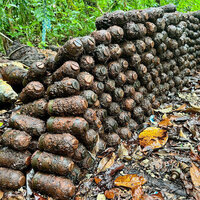
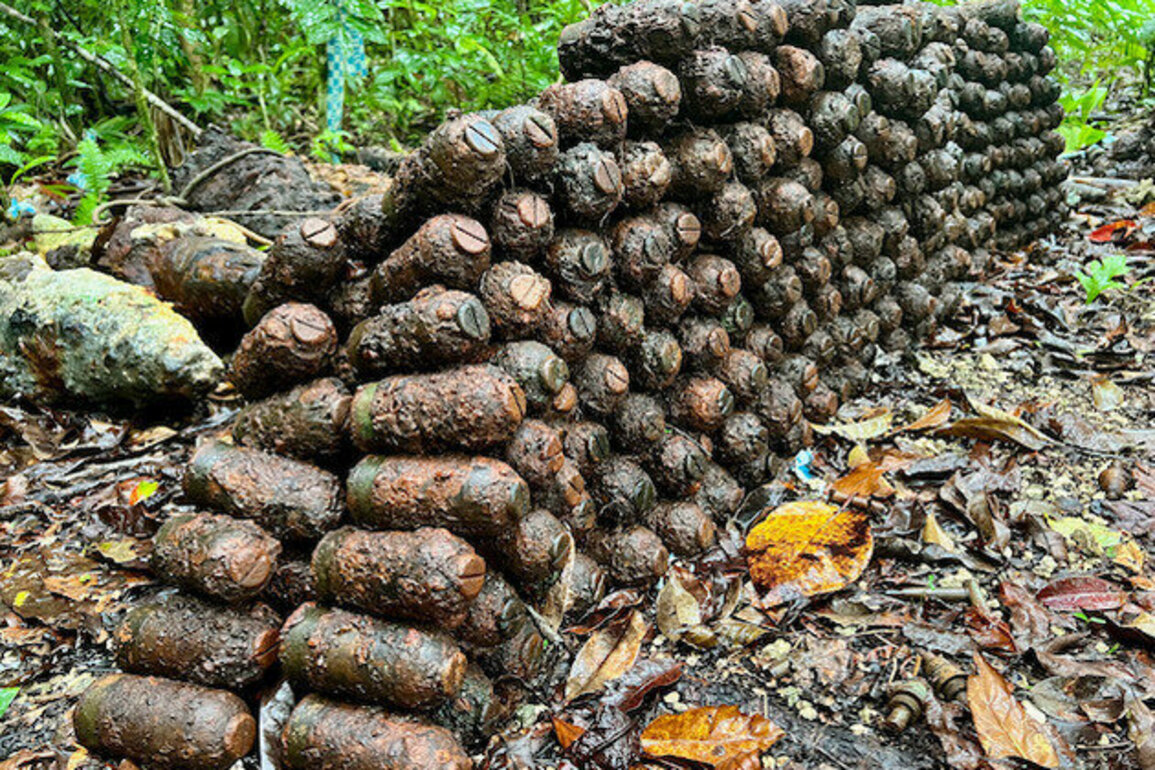
Unexploded ordnance, or UXO, are bombs and munitions, such as hand grenades and artillery shells, that did not detonate on impact, or they may comprise a weapons stockpile that was left behind after the war ended. They are often buried in the ground or lodged in a place where they can remain undetected for years.
The devastating impacts of UXO on civilians in the Ukraine, Syria and Gaza are regularly reported in the media. But Pitanoe and her friends were in Honiara, the capital of the Solomon Islands. And the bomb was one of vast quantities dropped by Allied and Japanese forces on Guadalcanal Island during theSolomon Islands Campaignof World War II.
Emily Davis, Programme Manager in the Solomon Islands forThe Halo Trust, the global UXO clearance non-government organisation, said:
World War II spread to the Pacific when Japanese forces attackedPearl Harbour, Hawaii, in 1941 and advanced rapidly across the Pacific, soon reaching Papua New Guinea (PNG), Bougainville and Solomon Islands. After thebombingof Darwin in 1942, Britain, the United States (U.S.) and allies, including Australia and New Zealand, rapidly deployed troops to the Solomon Islands, located northeast of Australia.
Criticalbattleswere waged across the country and, by 1943, Japanese forces were retreating. They were then defeated in PNG and Guam, Marshall Islands and Northern Mariana Islands in the north Pacific before the Allied victory was declared in August 1945.
Today tourists converge on the Solomon Islands to explore the sites of epic battles and relics, such as abandoned fighter planes and shipwrecks. But, for islanders, these places are minefields in a country where UXO is discovered almost every day.
Pitanoe recounted:
At the end of the village, there was an old Second World War bunker, a childhood play spot, but also where an unexploded bomb was discovered in May. It was safely disposed of by the Solomon Islands Police Force, as were other explosive items discovered last year in the grounds of aschooland thecentral food marketin Honiara.
Last year alone more than5,400ordnance items were cleared in the Solomon Islands by police and the efforts ofOperation Render Safe, a multi-country mission led by Australia to clear UXO in the Pacific every two years. In total, the police have disposed of an estimated 30,000 UXO items so far.
But if they are discovered too late and detonate, the impacts on peoples lives can be lifelong and include disability, loss of employment, increased poverty and trauma. And there is disruption to national development when contaminated land becomes unusable for farming, economic projects and the building of roads and hospitals. Davis also warns that climate change and population growth, which is driving migration from coastal areas to contaminated inland areas, is likely to exacerbate the issue. While ageing explosives canleak toxic substancesinto land and water, posing threats to plant, marine and human health.
The Solomon Islands is one of the worst affected by UXO in the region, but there are others includingPNG, Vanuatu, Tuvalu, Guam, Marshall Islands and the Federated States of Micronesia. In August, a massive deposit of old landmines and weapons left by U.S. Forces in 1944 surfaced inSaipan, Northern Mariana Islands, afterTropical Storm Krosaeroded the coast.
To begin addressing the problem, some countries are conducting UXO surveys and, in 2023, this was begun by the Halo Trust in the Solomon Islands. The Trust is also set to start similar work inOro Provinceand the Autonomous Region ofBougainvilleinPNG, a country where an estimated more than 25,000 people have been killed or injured by World War II era ordnance since 1945.
But implementing clearance programs requires major fiscal and technical resources; a significant burden in developing Pacific Island nations. Especially the Solomon Islands where poverty affects about a quarter of the population and rural communities contend with lack of government services and economic development.
Given the problem has been imposed on their countries, many Pacific Island leaders have called for remediation to be shared.
Johnson Toribiong, then President of Palau declared in 2012:
However, there is no legal liability.
Fool's gold: China beguiles the South PacificChina is pushing into deep-sea mining of minerals in the Pacific region, but its endgame may be more than just metals.
Professor Rain Liivoja, Deputy Dean of Research at theUniversity of Queensland Law School, toldIA:
The1997 Mine Ban Treatyand theConvention on Certain Conventional Weapons, for instance, regulate and ban the use of landmines and other explosive weapons.
But they do not apply to retrospective conflicts, in which case:
The international response has included the work ofOperation Render Safesince 2013, the Australian Governments support for capacity development of the Solomon Islandspoliceand the Australian Armystrainingof them in explosive weapons disposal. Since 2009, theU.S.has also financially contributed to ordnance disposal efforts across the Pacific, including the work of the Halo Trust.
But much more is needed. The severe scale of contamination in the Solomon Islands means that it will be unfeasible to rid the country of UXO entirely, according to Davis. Yet international funding and technical support will need to continue throughout the region for many years to reduce the massive threat that still hovers.
Catherine Wilsonis a freelance journalist and correspondent, reporting on current affairs, global issues, humanitarian crises, politics and international development.