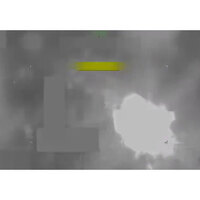



The weapons were dropped at least twice last week during anti-terror operations in northernMali, according to local sources, security specialists and a rights group which documented the attacks.
The first strike happened last Friday at Oubder, near In-Gouzma, in theTimbukturegion. The second happened on Sunday at Tadjmart, near Aguelhoc, in theKidalregion.
Cluster munitionsrelease large numbers of smaller explosives over wide areas. Many fail to detonate immediately and can remain deadly long after fighting ends.
Images obtained by RFI allowed specialists to identify a Russian-madeRBK-500cluster bomb andShOAB-0.5bomblets weapons of the same type that have also been used in Syria and Ukraine.
Malis army publicly claimed responsibility for both air strikes as part of its counter-terror operations, but did not specify the weapons used. Requests from RFI for comment went unanswered.
Junta ally says Malians still 'love their army' despite rebel gains
Civilian victims
Concern is growing because unexploded bomblets can easily be picked up by civilians who do not recognise the danger.
The Collective for the Defence of the Rights of the People of Azawad/North Mali (CD-DPA) said it documented both strikes through its network of civilian contacts in northern Mali.
This is the first time we have seen these cluster bombs, Tilla Ag Zeini, secretary general of CD-DPA, told RFI.
It is dangerous for civilians and for children who might play with them or touch them. It can be deadly. Herders and other people who do not know what they are dealing with could also become victims.
Cat-Uxo, a specialist de-mining website, said the bomb can release 565 smaller explosives over a large area. Many do not explode on impact and can remain dangerous for years.
More than 100 countries have signed theConvention on Cluster Munitions, also known as the Oslo Convention, which bans the bombs because of the risk they pose to civilians.
Mali ratified the treaty after it came into force in 2010.
TheLandmine and Cluster Munition Monitor, a civil society group, says more than 90 percent of people killed or wounded by cluster bombs worldwide are civilians, many of them children.
Wagner replaced in Mali by Africa Corps, another Russian military group
Rebels gather proof
The Azawad Liberation Front (FLA), aTuaregseparatist coalition, condemned the strikes in a statement published on Tuesday and said it had collected unexploded remnants from the attacks as evidence.
The FLA and the al Qaeda-linked armed groupJNIMhave allied against Malis army and its Russian partners from Africa Corps,a Kremlin-controlled Russian paramilitary force that remained in Mali after the Wagner Group announced its withdrawal from the country in June 2025.
Violence has also intensified in southern Mali.
At least 15 vehicles, including buses, trucks and cars, were burned on Tuesday near Faraba, between Siby and Narena, on the road linking Bamako to Guinea, several local sources told RFI.
JNIM fighters ordered passengers out of the vehicles before setting them on fire. No deaths were reported.
The attacks are part of a blockade imposed by JNIM around Bamako since late April. Malian military operations have so far prevented the blockade from becoming fully effective.
This article has been adapted from theoriginal versionin French byDavid Bach.
Originally published on RFI