

Gerard McDermott
Download PDF
May 25 2026
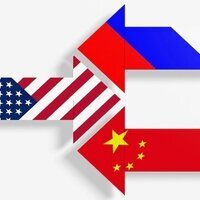
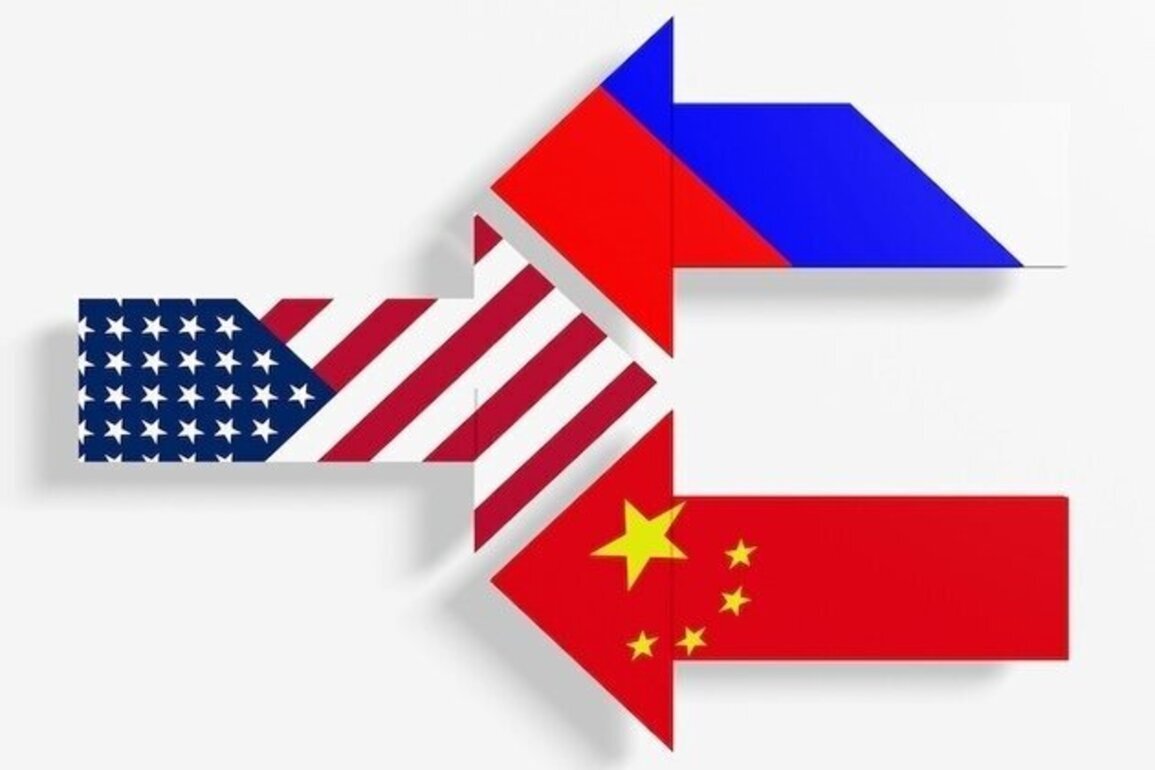
JEGAS_RA/DepositphotosOne of the most significant changes to the global geopolitical order since the beginning of this decade has been theformation of a new bloc of non-Western authoritarian challengers to Western or US-led hegemony. The Neo-Authoritarian Bloc (NAB) of China, Russia, Iran, North Korea, Belarus, Venezuela, and Myanmar has collaborated militarily in Ukraine and Myanmar, and the forms of support put forward by this new grouping have led to changes in the dynamics of both conflicts significantly. The involvement of the bloc has altered the trajectory of both conflicts: the besieged junta of Min Aung Hlaing in Myanmarhas survived five years of widespread armed rebellion due to the substantial level of support received from its fellow authoritarians. Similarly, Vladimir Putins mismanaged full-scale military invasion of Ukraine has been sustained by a consistent andhigh level of support from the NAB. The key types of support provided to both regimes fall into three categories: diplomatic, economic, and military. This article will discuss how global geopolitical changes, such as the formation of the bloc, have greatly affected the dynamics of these two conflicts and have also led to the thawing of previously frozen territorial disputes.
Terminology
In 2022, I coined the term Neo-Authoritarian Blocto refer to theconsistently high level of collaboration and exchangebetween China, Russia, Iran, North Korea, Belarus, and Myanmar since the beginning of this decade. With the abduction of Nicols Maduro in January 2026, these are now the six core states in this bloc. There are also other authoritarian states that maintain a high level of collaboration with the bloc, but have not provided military support to these six core states. This new bloc is neither a formal alliance in the traditional sense, nor even an axis, as its members lack any unifying ideology. This grouping is a bloc, as it is a collective of states who are aligned diplomatically, economically, and militarily as a counterweight against US and Western influence. Additionally, the regimes that came to form the NAB all share the commonality ofhaving become isolated after years of sanctionsby Western states.
What unifies the bloc are the shared interests of self-preservation, the domination of their near abroad,and the creation of an assertive response to their challengers in the West. Additionally, many members of the bloc have long held ambitions that have been obstructed by the West, such as the re-acquisition of lost territories. The fact that this bloc is now an actor in international relations has become increasingly more observable since the beginning of this decade, due to thegrowing number of bilateral economic and defence agreements within the group. Overall, the cohesion of the NAB has led to each core member of the bloc having a greater advantage in their conflicts than in previous decades, as can be seen in Myanmar and Ukraine.
Other terms have been used to describe this new phenomenon:CRINK, has been used by Peter Van Praaghwho refers to this new grouping as an axis. This term is insufficient, as it excludes Belarus, Myanmar, and Venezuela, who have also been core states in this bloc. Richard Fontaine and Andrea Kendall-Taylor have used the termaxis of upheaval; Niall Ferguson has labeled this grouping theaxis of ill will; while Anne Applebaum has described the NAB as anetwork of convenience. I do not use these terms because the NAB is strictly not an axis. A key characteristic of an axis is a common or unifying ideology. The official ideology of the Islamic Republic of Iran is irreconcilable with the ideologies of the Chinese Communist Party, Russias hyper-nationalists or Myanmars militarists. The priority for the NAB is to overcome the obstructions and restrictions of their common adversaries in the West. This trumps any ideological concerns of these authoritarian states. The NAB is also a new grouping and one that did not exist a decade ago.
The Coalescence of the Bloc
The first significant challenge to NATO and US influence in the post-Cold War era was Russias invasion and annexation of two regions of Georgia in August 2008. Russia followed the Georgian war with the 2014 annexation of Ukraines Crimean peninsula and the invasion of Ukraines eastern Donetsk and Luhansk provinces. In January 2019, President Xi Jinping announced thatthe Taiwan issue cannot be passed down from generation to generation,signaling a shift in Beijings view on the self-ruling islands status. Tensions between the US and China had begun in 2018 over the imposition of tariffs and increased in 2019 when Trump scolded China over growing political strife in Hong Kong. The Covid-19 pandemic led to more scathing criticism from the Trump Administration which continued throughout that year.
By 2021, Sino-American relations were at an all time low and the Wolf Warrior diplomacy of Chinese foreign minister Wang Li, together withclashes between China and India in 2020andgrowing tensions between China and the Philippines in 2021were further signs of changes in Beijings worldview. Overall, the divisions that had been established during the first Trump administration had already laid the foundations for the cohesion of the NAB during the Biden administration, which in its first weeks refused to establisha detente with either ChinaorRussia, and also failed to obstruct the coalescence of this bloc during its early formation. 2021 and early 2022 saw members of the emerging bloc sign numerous bilateral treaties and agreements, the most significant of which was theNo limits partnership of Russia and China, signed on February 4th, 2022. This was followed by the full-scale military invasion of Ukraine by Russia on February 22nd. China later carried out itsfirst military drills over Taiwan in August 2022. 2023 also saw bloc states providing an increasingly higher level of military support to both Russia and Myanmar.
Diplomatic support within the bloc increased in 2023 withChina playing the vital role of peacemaker between Saudi Arabia and Iran, reducing the Islamic Republics isolation in its near abroad. With support from China and Russia, Iran and Myanmar have proven adept at building new and substantial partnerships, despite their image as pariah states. December 2023 sawVenezuela hold a referendum on the annexation of the Essequibo regionof neighbouring Guyana. The Maduro governments revival of a territorial claim that had lain dormant for decades is similar to the revival of Russia and Chinas irredentist claims over Ukraine and Taiwan. Venezuelas collaboration with and imitation of other NAB states has also not been a recent development. In the 2010s, it was speculated thatHezbollah, the Iranian-backed armed group, had established training and logistics bases in Venezuela, in addition to Russia establishingmilitary bases in the country during the same period.
The cohesion of the NAB throughout the first half of the 2020s was unlike anything seen in the 2000s or 2010s, despite the emergence of BRICS or the Shanghai Cooperation Organisation (SCO) during that time. The tensions created during the first Trump presidency, followed by the reactive and directionless foreign policy of the Biden administration, created a perfect storm by incensing Americas authoritarian rivals during one administration, and then creating space for them to coalesce during the following administration. Late-2024 sawNorth Korea provide at least 10,000 soldiers to Russias war effort in Ukraine. This was another progression in the cohesion of the NAB with one core state providing another with military personnel. Yet, soon after, the Assad regime in Syria, a long time ally of both Russia and Iran, was overthrown in December 2024. Assads regime had also moved closer to China a year before being removed;In September 2023, the two states signed the China-Syria Strategic Partnership.
The formation of the NAB has also created an enabling environment for sub-state actors: Iranian and Russian proxies, the Houthis, Hamas, and Hezbollah, in addition to the leadership of Bosnias Republik Srpska, respectively. After years of growing tension, the attack by Hamas on Israel in October 2023 led to a regional conflict between Israel against Iran and its network of proxies, culminating in joint US-Israeli attacks on Iran in June 2025 and March 2026. Irans air defence systems, purchased from other NAB states, failed to repel the aerial bombing campaign. This humiliation in June 2025 came less than a year after the removal of the Assad regime.
Described as Moscows second front in Europe. Russia has patronised Bosnian-Serb leader Milorad Dodik since the 2010s,providing economic, diplomatic and military support to Republik Srpska. Dodik, who has announced a desire for independence from Bosnia and Herzegovina, visited Russia for meetings four times in 2025, and haspublicly expressed support for Russias invasion of Ukraine. Overall, since the 2010s, the peace established by the Dayton Agreement of 1995 has come under increasing pressure due to a revival of Bosnian-Serb separatism, supported by Russia. Following the lead of Russia and China, bloc states and the aforementioned sub-state actors have seen the geopolitical changes of the decade as a green light for achieving their long-held aims. The authoritarian coalescence has seen numerous agreements within the bloc. In addition to formal agreements, states within the NAB have provided a diplomatic shield to both the Kremlin and to the junta in international forums and have also provided vital economic support to both. Themilitary support provided to both the Kremlinandto the juntaby the bloc have been decisive in sustaining both parties in their armed campaigns and have provided an example to other NAB states that, with bloc support, military action is more likely to be successful in the present decade than it would have been in previous decades.
Despite large amounts of recent arms transfers and agreements within the NAB, the bloc failed to support three of its members: the Assad regime in Syria, the regime of Nicols Maduro in Venezuela, and the theocratic regime in Iran. After surviving thirteen years of rebellion beginning with the Arab Spring, Bashar Al-Assad fled Syria in December 2024 for Moscow. Despite Maduros close partnership with Moscow for over two decades and a growing level of collaboration with both Beijing and Tehran, the Russian and Chinese responses to Maduros abduction were muted. The US has taken military action against Iran twice since 2025. Although Moscow provided Tehran with intelligence about US forces in the region, support from Russia and China has been limited. These setbacks have raised questions about the competence within the bloc for assisting their fellow authoritarians with the most crucial activity of all: regime survival. Yet none of these three conflicts are in Russia or Chinas near abroad and are minor concerns when compared to the war in Ukraine, or Chinas ambitions in Taiwan. Regardless, these three setbacks have dented an image of strength that Putin and Xi had cultivated since their 2022 no limits agreement and have shone a light on the vulnerabilities of the bloc created by Chinas overly-cautious foreign policy and Russias neo-imperial over-reach. The fact that the three regimes were using Chinese and Russian military technologies has also been a source of humiliation for the two bloc leaders.
Myanmar
Since 2021, a Civil War has taken place in Myanmar between the junta of Min Aung Hlaing and an alliance composed of the pro-democracy Peoples Defence Forces (PDF) and Ethnic Armed Organisations (EAOs). Despite gaining territory against the junta in 2022 and 2023, both sides have been locked in a stalemate since. I have argued that the endurance of the junta has been due to theconsistent and high level of support that they have received from the NAB. Following the coup of February 1st 2021, the new junta were sanctioned by Western states and the United Nations General Assembly passed a resolution calling for an arms embargo against Myanmar. Belarus opposed this resolution while other bloc members abstained. Later, the United Nations Security Council failed to agree on a binding resolution against the junta due to obstructions from Russia and China. The juntas authoritarian allies in Southeast Asia alsoshielded them from any decisive action being taken by the Association of Southeast Asian Nations (ASEAN). Overall, this diplomatic support or bloc shielding was essential for the survival of the newly established junta in its early years. Alexander Lukashenko, the leader of Belarus, was later the first head of state to visit Myanmar in 2025.
Behind the diplomatic shield created by the bloc, the junta has expanded its trading network and further strengthened relationships with its collaborators in the NAB.Myanmar was also granted the position of Dialogue Partner at the Shanghai Cooperation Organisation (SCO) in May 2023. Recently, the junta applied to join both BRICS and the Eurasian Economic Union (EAEU), with both applications being supported by Russia. The SCO, BRICS, and the EAEU are three economic communities dominated by Russia and China. The bloc has ensured that the junta have not become diplomatically or economically isolated following the coup. Russia has been the juntas main provider of arms and has exportedmore than 400 million USD of weapons to Naypyidaw since the coup. Moscow has provided training programs to thousands of Tatmadaw officers in Russia and has also sent hundreds of its own personnel to Myanmar. The arms exports from Russia have also included highly sophisticated military aircraft such as theSu-30SME fighter jet, Yak-130 light combat aircraft, Mi-35 gunships, Mi-17 transporters, and Orlan-10E surveillance drones. 2025 saw Russia providing the junta with its largest shipment of weapons to date. Additionally,artillery shells made in Myanmar have been used by Russia in the war in Ukraine. This partnership between the two countries has become increasingly stronger since 2021, despite substantial losses by the junta.
Since 2021,China has sold more than 250 million USD worth of aircraft, armoured vehicles, and more conventional weapons to the junta. Belarus has also been a major arms supplier.North Korea is also known to have supplied weapons to the military in Myanmar and has also collaborated with the juntaon rocket-building and nuclear-related projects.Visits by Iranian military officials to Myanmar have taken place in recent years; Iran has sold weapons and provided training to military officers in Myanmar. Additionally, before the onset of the 2026 war with the US,Irans shadow fleet provided the junta with much needed jet-fuelfor airstrikes. This level of collaboration is notable as Tehran does not maintain an embassy in Naypyidaw.
One exception within the NAB has been Chinas involvement in Myanmars Civil War. China has diplomatically engaged with and sold weapons to different sides in the war,particularly with EAOs based along its border. Beijing has also allowed for the sale of weapons to the PDF through arms dealers based in the south of China. One key difference between the two conflicts is that unlike Ukraine, the PDF in Myanmar have not received any military assistance from external states. Another form ofsupport provided to the junta from the NAB has been digital or technological support. Chinese and Russian firms have assisted the junta in establishing the golden firewall, a national internet gateway that can be controlled by the state, modeled on Chinas great firewall or Russias digital iron curtain. Russia has also allowed the junta the use of their surveillance satellites.
Ukraine
After the full-scale military invasion of Ukraine in February 2022, Russias trading partnerships with Western European states either ended or were downgraded. Waves of sanctions have followed in the years since. To counter attempts at economic isolation by the West, Russia has strengthened all of its partnerships within the NAB. In particular, its partnership with China has proven essential for the stabilisation of its economy since 2022. Additionally, Russia has strengthened its relationships with members of BRICS and members of the EAEU. The sanctions regime imposed by the West since 2022 has been circumvented by Russia by trading through intermediary countries, establishing shell companies, and using its shadow fleet. The invasion of Ukraine has also received vocal support from leaders such as Alexander Lukashenko and Milorad Dodik in Europe and the leaders of African states supported by Russia, such as those in Mali, Burkina Faso, Niger, and the Central African Republic.
Similar to the conflict in Myanmar, it has been the military field where support from the NAB has changed the trajectory of Russias war in Ukraine. Before the establishment of a factory manufacturing Iranian-style drones in Russia in 2023,Moscow was dependent on Iran for large numbers of Shaheed or kamikaze drones. Iran has also provided Russia with hundreds of short range ballistics missiles.North Korea has been a key supplier of ammunition to Russia since the war began, shipping over 9 million artillery shells since 2022 and also short range ballistic missiles. Most notably, North Korea has deployed between 10,000 and 12,000 of its soldiers in Russia and Ukraine since 2024. One reportclaimed that 6,000 North Korean soldiers have been killed in the conflict so far. Belarus has been another key partner in Russias war in Ukraine, providing Russia with hundreds of tanks and armoured personnel carriers, thousands of tons of ammunition, and allowing Russia to launch airstrikes from its territory. Belarus has also allowedRussia to deploy 30,000 soldiers on its territoryin addition toallowing Russian nuclear weapons to be stationed there. The Belorussian military also provided training programs to Russian soldiers before their deployment in Ukraine. The junta in Myanmar has provided artillery shells to Russia and the two countries have carried out joint training exercises together. In February 2026,the two countries signed a five-year military pact.
Similar to its involvement in Myanmar, the one exception within the bloc has been China. Although signing the No Limits partnership agreement with Russia three weeks before the invasion, China did not provide military equipment to Russia in the early years of the war, allowing only for the export of dual-use goods.Since 2024, materials used for manufacturing drones, tanks, and ammunition have been provided by Chinese companies.Overall, China has prioritised its trade relationships and has been cautious to avoid sanctions since 2022.
Taiwan
Speaking in December 2025, Chinese President Xi Jinping describedreunification between mainland China and Taiwan as consistent with the trend of the times. Historical revisionism or irredentism has been a key characteristic of the perspectives of states within the bloc: Russias invasion of Ukraine; Venezuelas referendum concerning the Essequibo region; and recent statements from the Bosnian Serb leadership advocating secession from Bosnia and Herzegovina are other examples.
As discussed, in both the conflicts in Myanmar and in Ukraine, China has employed a policy of caution. Additionally,when its collaborators in Iran and Venezuela were attacked, the response of Beijing was subdued. Throughout its rise, China maintained a cautious foreign policy and established its own supportive environment internationally through creating new institutions,practicing flexigemony, and (more recently) competing with the West geopolitically through the NAB. Despitethe period of wolf warrior diplomacyearlier this decade, China has overall practiced caution and flexibility throughout its rise. An exception to all of this has been Chinas posturing toward Taiwan since 2018. Taiwan has become an exception to the Chinese norm of caution and restraint due to geographical and historical factors, and also due to recent changes in the global geopolitical order and changes in how states behave.
Since the early-2010s,Beijing has financed the establishment of a large navyand has carried out anincreasingly frequent number of military drills around the island since 2022. Numerous public statements by President Xi since 2018 clearly express the historic duty of the mainland to reunify with Taiwan and that such a responsibility should not be passed down from one generation to the next. The first Trump Administrations lack of interest in Taiwan had been another enabling factor for Beijing. However, the failures of Chinese military technologies in Venezuela and Iran, and a list ofscandals within the Chinese military in recent years, including anumber of purges since 2023, have all raised questions concerning Beijings competence in carrying out effective military action against the self-governing island. Regardless of its militarys shortcomings, Beijing has made it clear through its statements that military action against Taiwan is possible in the near future. I contend that the successes of Russia and Myanmar in their military campaigns, with the support of the NAB, has undoubtedly had an emboldening effect on China concerning its own ambitions in its near abroad.
Conclusion
The survival of the junta in Myanmar and the endurance of Russias military campaign in Ukraine would not have been possible without support from the bloc. The internal dynamics of the bloc are novel and particular to this era: members are flexible and informal in how they collaborate and they do not use collective agreements that would create inconvenient obligations or restrictions. Bilateral agreements are the norm, however many states collaborate without agreements. The strengths of the bloc are that is amorphous, its arrangements are flexible, and the roles played by members are optional. Despite the fall of Assad, the abduction of Maduro, and the wars against Iran, the bloc has seen some level of success in Myanmar and Ukraine. In addition, territorial disputes, such as Taiwan, have resurfaced and the coalescence of the NAB will impact such conflicts at inter-state and sub-state level in the years ahead. Going forward, the effect that these changes at the top of the global geopolitical order (the emergence of the NAB, multi-polarism, poly-alignment etc) are having, and will have, warrant further investigation.
Further Reading on E-International Relations
- Myanmar: The In-Between Space and Its Implications
- Racism, Crimea and Crimean Tatars
- Retaining Ambiguity and Protecting Taiwans Democracy
- Eastern Ukraine is No More: War and Identity in Post-Euromaidan Dnipropetrovsk
- Russian Military Aggression or Civil War in Ukraine?
- Russian Nationalism (Imperialism) and Ukrainian Nationalism
About The Author(s)
Gerard McDermottcompleted his PhD at City University Hong Kong. His work has been featured in The Kyoto Review of Southeast Asia, The Diplomat, Prachatai, and Politico. He is currently carrying out research concerning the Neo-Authoritarian Bloc, multi-polarism, and the rise of digital authoritarianism.
TagsAuthoritarian RegimesMyanmarNeo-Authoritarian BlocTaiwanUkraine