

Alex Cruikshanks
Download PDF
Sep 14 2025
25
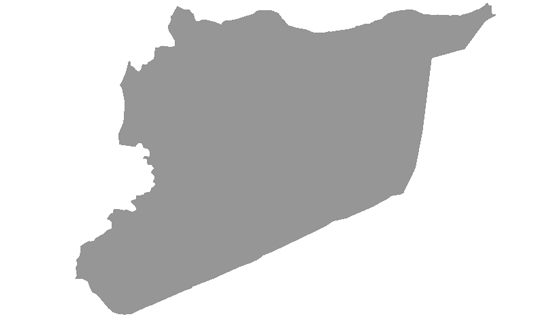
viewsWirestock/DepositphotosIn the dying days of his rule, Bashar Al-Assad reportedly tried one last desperate gamble to remain in power:sectarian partition of Syria.He proposed to his Russian patrons that he would abandon Damascus for Syrias coastal region, where his Alawite sect are demographically predominant, and proclaim the revival of theAlawite State, a polity that had briefly existed during the French colonial period. With most Syrian Kurds residing in the de facto breakaway Northeastern entity of Rojava, Assads scheme could set the seal on a tripartite ethnic division of Syria. Moscows answer came back: No. Though Russian rejection was probably motivated more by being too occupied in Ukraine to assist Assad, its striking that the Kremlin reportedly opposed breaking up Syria at all and all the more surprising in an international environment which had seemingly returned to the idea of partitioning spaces along ethnic lines. Partitionism seemed to have returned with a vengeance in the 2010s. But, as I will argue here, that return has failed to manifest though why is a tougher question.
In the early 20th Century, as ethnic nationalism spread, drawing lines on a map in an attempt to carve heterogenous territories into new homogenous states becamea common diplomatic practice of the eras premier imperial powerBritain. After partitioning Ireland into Protestant and Catholic-majority states in 1920, British diplomats mediated new Greco-Turkish borders drawn along ethnic lines in 1923, proposed partitioning Palestine into Jewish and Arab states in 1937 (adopted by the UN a decade later), assisted the Nazi breakaway and annexation of Czechoslovakias ethnically German borderlands in 1938, pushed for the post-World War II wholescale redrawing of the map of East-Central Europe and, of course, split their huge South Asian colony into Hindu India and Muslim Pakistan in 1947. Usually these partitions were accompanied by large-scale ethnic cleansing, as people were forcibly uprooted from the wrong side of the new border. Indeed, British officials often saw this as desirable, given the whole point of the new borders was ethnic homogenisation. No less a figure than Winston Churchill commented:There will be no mixture of populations to cause endless trouble A clean sweep will be made.
In the Cold War, however, partitionism went out of fashion. As decolonisation swept the world, the newly independent states strongly insisted on the sanctity of the old imperial boundaries that were now their borders, seeing efforts to alter them according to ethnic criteria as a continuation of colonial-era divide and rule policies. When adjudicating a boundary dispute between Burkina Faso and Mali in 1986, the International Court of Justice explicitly noted the exceptional importance of this principle known as uti possedetis juris to African states, andelaborated that:
Accordingly, the South African apartheid regimes efforts to maintain White rule by carving ethnic bantustans out of its territory went denounced and unrecognised by the international community. When Turkey invaded Cyprus in 1974 to partition the island into ethnically homogenous Turkish and Greek halves by proclaiming a new Turkish Republic of Northern Cyprus, the international response once again was denunciation and non-recognition.
When Yugoslavia collapsed in the 1990s, despite local nationalist leaders aggressively pushing for total regional ethnic partition, the international anti-partitionist norm provided a strong countervailing force. When the French judge Robert Badinter was asked by the European Union to lead an ad hoc tribunal to judge this matter, he applied uti possedetis juris to declare that the old Yugoslav republican boundaries were now legal international borders. He explicitly cited the ICJs above ruling,quoting its contention that:
Badinters ruling was an unwelcome surprise for many European diplomats who had come to favour such a grand Balkan-wide partition. The Chairman of the Yugoslav Peace Conference, Lord Carrington, described it as not very helpful. His successor Lord David Owen, also a partisan of the idea, was told it was considered out of date to draw state borders along ethnic lines, but nevertheless tried to get around this obstacle by proposing an internal partition of Bosnia-Herzegovinainto three Bosniak, Serb and Croat entities, but even this would end up discarded in favour a shallowertwo-way internal partitionbetween one Serb entity (Republika Srpska) and one mixed Bosniak-Croat entity (the Federation).
But the erosion of the anti-partitionist norm really began with the growing consensus behind the fabled two-state solution in Israeli-Palestinian peace talks. Though both sides doves backed the solution in principle,their interpretations subtly but crucially differed.Palestinian leaders favoured two states in accordance with international law, in which the Palestinian state should consist of all territory within the 1967 Green Line, with no demographics considerations and border changes kept to an absolute minimum. The Israelis preferred two states for two peoples and the idea that a major goal should be hafrada (separation) of Jews and Arabs. Accordingly, the 1967 border should be subject to extensive modification to leave Israeli Jewish settlers in the West Bank (and possibly also Palestinians within Israel) on the right side: i.e. ethnic partition. Successive US administrations backed the Israeli interpretation: an early affirmation of this was President Bill Clintons parameters in December 2000 explicitly stating regarding Jerusalem thatThe general principle is that Arab areas [should be] Palestinian and Jewish ones [should be] Israeli.By 2009 two states for two peoples seemed inevitable. Israeli Prime Minister Ehud Olmert and Palestinian President Mahmoud Abbas were reportedly closer than ever to a territorial agreement, and even the Israeli right-wing hawks leader Benjamin Netanyahu had finally indicated his support, marking a huge turnaround from a few decades earlier when both sets of leadershad adamantly insisted on only one state in the land.
From here, proposals for ethno-communal division of various countries abounded through the 2010s. In 2011 Sudan split between an overwhelmingly Muslim North and a South populated predominantly by Christians and believers in indigenous faiths. In Bosnia, Republika Srpska leader Milorad Dodik previously seen as a reformist moderate became increasingly nationalistic,flirting with the idea of breaking away from the Bosnian state.His Croat nationalist counterpart Dragan ovi soon joined him to push fordividing the Federation into explicitly Bosniak and Croat entities.Similar discussions surfaced nearby in newly independent Kosovo. Serbian leaders had by now tacitly recognised that they had little chance of retaking their lost province, but continued to harbour hopes ofprising away Kosovos predominantly Serb Northernmost areas.But in 2018, Serbian president Aleksandar Vui revived the idea with the added carrot for the Kosovans that it could involve atradein which North Kosovo would become part of Serbia in exchange for predominantly Albanian areas in Southern Serbia joining Kosovo. But this time, he found more receptive counterparts in Kosovan president Hashim Thai, who seemed genuinely open to the idea,as did EU foreign policy commissioner Federica Mogherini.
Elsewhere in Europe, in the aftermath of the Maidan Revolution in Ukraine and subsequent violent campaign by Russian proxy forces, proposals about partition began to circulate,predictably from Russian officialsbut alsosome in the West.A popular media narrative emerged of a country deeply divided between Western Ukrainian-speakers and Eastern Russian-speakers, along with countless reproductions of the same map highlighting eight Southeastern Ukrainian regionsplus Crimea. Sometimesthis mapwas invoked as showing the vote share for Viktor Yanukovych in the 2014 election, sometimes as those regions where Russian-speakers outnumbered Ukrainian-speakers. Either way, the message of a clear-cut ethnic divide was the same; Russian nationalists adopted the same map as their demand for apost-partition Novorossiya.For Cyprus, the 2000s had seemed promising for prospects of reunification: UN Secretary-General Kofi Annan negotiated a plan for a single bizonal state in 2004, and Northern Cyprus longtime partitionist ruler Rauf Denkta was ousted by the pro-reunification Mehmet Ali Talat, backed by new Turkish Prime Minister Recep Tayyip Erdoan. But despite strong Northern support, the Annan Plan was rejected by referendum in the predominantly Greek South. After a failed 2016 coup against him, Erdoan turned increasingly against reconciliation: following a failed round of talks on reunification in 2017, he moved to undermine pro-unification Northern Cyprus president Mustafa Aknc, and announced his support for atwo-state solutionin Cyprus instead.
In the Middle East, following the 2003 US invasion of Iraq, some American officials most notably a certain Senator Joe Biden had proposed a Bosnia-styleinternal tripartite ethnic partition, retaining one Iraqi state but with distinct Kurdish, Sunni Arab and Shia entities. At the time this idea was largely dismissed. But in the 2010s it returned in a more extreme form following the sudden rise of ISIL. Former UN Ambassador and future National Security Adviser John Bolton proposed atotal partition of Iraqinto three separate independent states in 2015. Obamas Defense Secretary Ash Carter also openly considered the idea that a multisectarian Iraq turns out not to be possible, and stating he was prepared to countenance a scenario thatthere will not be a single state of Iraq.And then to Iraqs neighbour, Syria. Retired US Admiral James Stavridisemerged in 2015-16as a prominent advocate ofpartitioning the country,explicitly citing Bosnia as a model to follow. In early 2016, it was also mooted Australian Prime MinisterMalcolm Turnbulland US Secretary of StateJohn Kerry. As the Assad regime recaptured territory in 2017,numerous commentatorsargued that de facto partitionhad become inevitable.
Many of the conflicts discussed here are not over and this article might not age well. But, at least at the time of writing, I would observe that, except for the mutually agreed Sudan partition (where major sectarian problems persist in both North and South nevertheless), all of these partitionist projects have stalled or even faced suffered significant setbacks.
The most remarkable repudiation of ethnic partitionism has been in Ukraine. While the trope of adeep linguistic dividewas always anoversimplified exaggeration, there was a loose coalition of oligarchs, politicians and voters associated with Yanukovychs Party of Regions centred in the more Russophone South and East and which favoured closer relations with Russia. Key word was because Putin destroyed it. His proxy thugs lofty ambitions of creating a Novorossiya across half of Ukraine failed to win support outside small pockets of Donbas. With Crimea and Donbas removed from the electorate, the old Yanukovych coalition was no longer viable. Those who remained were further put off by the lawlessness of the Donbas Peoples Republics, and new coalitions formed, which saw a native Russian-speaker elected Ukraines president in 2019. Russias 2022 full-scale invasion completed the process: evenpoliticiansonce seen asMoscows foremost allies in Ukraineburned their bridges and rallied to support the government.
In Kosovo, repudiation came when Albin Kurti, leader of the staunchly anti-land swap Vetvendosje party, came to power in February 2020. In June Thai, the most prominent advocate of the partitionist idea in Kosovo,was indicted for war crimesand forced to resign; while still a factor in Kosovo politics pending his trials outcome, he is not the force he once was. US mediators wereforced to denythat they were even considering the idea. In Bosnia, partition has not so much been repudiated as stalled. Despite pushing their ideas for over a decade now, Dodik still doesnt have his independent Republika Srpska, and ovi still doesnt have his Croat entity. In 2021,a non-paper reportedly authored by Slovenian Prime Minister Janez Janaadvocating full partition of Bosnia and a broader ethnic redrawing of Balkan borders was widely rejected, including by his own president. A few months ago,Dodik was convicted and sentenced to a years jail term and a ban from politicswhile he continues to try to push Bosnia further into crisis to save himself,neither ovi nor the RS opposition seem particularly inclined to bail him out.
Moving to the wider Middle East, in Iraq any partitionist momentum stalled after a breakaway bid by the autonomous Kurdistan Regional Government in 2017 failed in the face of staunch opposition from the government in Baghdad. In Cyprus, it probably remains far too early to judge whether Erdoans shift towards partitionism will bear any long-term fruit, but as of yet the TRNC still remains recognised by no-one but Ankara, andpolls for the presidential electionlater this year showa tight race, giving the pro-unification camp a good chance of returning to power compounded by the outbreak ofanti-government and anti-Ankara protestsearlier this year.
As for Syria, where this article began, it seems that when the rebels took Damascus, they took with it not just a Sunni Arab-dominated core chunk, but the whole country. In recent months, reports have begun to emerge that Rojava, now faced with a more-pro-Turkish Syrian regime, haveagreed to their reintegration into the Syrian stateas part of parallel peace negotiations between Turkey and PKK leaders in Turkey involvingthe latters disarming and dissolution. While it remains very early, and such negotiations might go nowhere, it does seem that momentum has swung back behind a single, united Syria. And then theres Israel-Palestine, which offers a cold reality check to my tendency to sympathise with anti-partitionists. Netanyahu has long backtracked on his nominal acceptance of a Palestinian state and, now backed by an equally opposed US Republican Party, appears to seek permanent Palestinian subordination and disenfranchisement. Or worse.
There appears no singular reason why the 2010s resurgence of partitionism has stalled. It could just be coincidence. But Ill offer a more satisfying answer. Until relatively recently in history, state borders often changed through war or diplomacy, but people much more rarely moved. Nowadays this dynamic has reversed. Even ignoring norms of state sovereignty, modern states have become much more powerful, bureaucratic, and territorially deeper-rooted than in the past. By contrast, people have become more mobile, moving across continents far quicker and cheaper than a century ago. This new reality has been encountered by numerous governments promising immigration reductions only to find out its not quite that easy. As such, seeking entirely new borders based on snapshot demographic pictures has become more futile. But as Trump and Netanyahu are demonstrating, this has a dark side too. After all, if people have become more mobile,who says that movement has to be of their own free will
Further Reading on E-International Relations
- Opinion Post-Assad Syrias Cautionary Tale
- Opinion Assads Regime Has Fallen: Time to Lift Sanctions on Syria
- Opinion Why Allowing Syria Back into the International Fold was the Right Decision
- Opinion Syrian Comedy post-Assad
- Turkeys Role in Syria: A Prototype of its Regional Policy in the Middle East
- Opinion Beyond Neo-Ottomanism in Turkeys Syria Strategy
About The Author(s)
Dr Alex Cruikshanksholds a PhD completed at the University of East Anglia in 2023, focusing on the role of international mediators in the effort to find a settlement to the Bosnian War in the 1990s. In addition to also being the creator and host of the podcast The History of Yugoslavia, their work focuses on peace negotiations in the former Yugoslavia and other ethnically polarised conflicts, particularly those involving ethnic partitionism.
TagsSyria