

PARIS (CN) - In a sleek, modern courtroom at the Tribunal de Paris, the multinational corporation Lafarge - and some of its former employees, dressed in tailored suits with elbow pads, suede blazers and shiny loafers - is on trial on charges of funding terrorist organizations to facilitate safe passage to a cement plant during Syria's civil war.
The first-of-its-kind trial in France sees the corporation charged with terrorism funding, and some members with violating international financial sanctions. But the story is also unraveling to reveal a complicated web of potential human rights violations, shady payments and the murky involvement of state intelligence services.
Lafarge could owe up to $1.2 million if found guilty of funding terrorism and more if the company is found to have breached sanctions.
Civil war and terrorism
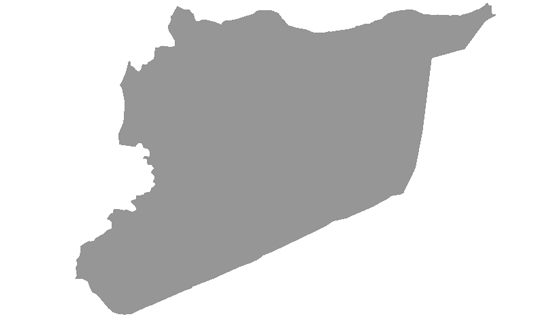
The story dates back to 2008, when Lafarge acquired the Jalabiya cement plant - a $680 million investment, still under construction at the time - after buying the Egyptian firm Orascom. Just a few months after the plant became operational in 2010, the country erupted into civil war.
When the war began as part of the wider Arab Spring in 2011, the existing government began to lose its grip on the country as armed rebel groups fought for control. In the years that followed, some of these groups - including the Islamic State group - controlled swaths of territory, including roads and infrastructure.
In 2012, Lafarge evacuated its expat workforce but kept the plant running through its Syrian employees, which prompted an additional ongoing investigation into the company over human rights violations.
"The factory is based in a very remote area in the north of Syria," Anna Kiefer, a litigation officer at the NGO Sherpa, said outside of the Paris courtroom Thursday. "Some of the employees who sometimes refused to go to the factory, because they had heard that there had been checkpoints or kidnappings, were threatened to be made redundant by the company and were not paid their wages."
Sherpa, alongside the European Center for Constitutional and Human Rights, filed the original lawsuit against Lafarge and 11 of its former employees in 2016. According to Cannelle Lavit, co-director of the Business and Human Rights Program at the center, almost 200 employees have filed applications to become civil parties in the case.
Lafarge and eight other defendants are on trial. Those present in Paris include Bruno Lafont, the former CEO of Lafarge; Christian Herault, the former managing director of its operations in Syria; Bruno Pescheux and Frederic Jolibois, two former managers of the Syria plant; and Jacon Waerness, its former security manager. Ahmad Jaloudi, another of the plant's former security managers, is not present, nor are Amro Taleb and Firas Tlass, two former intermediaries between Lafarge and the jihadist groups.
On Thursday, Isabelle Prevost-Desprez, the trial's lead judge, asked the defendants to detail how their careers led to eventual appointments at the Syria cement plant.
Pescheux, motionless and quiet, spoke of his affinity for the country from prior work there, and a longing to return.
"I keep excellent memories from that time. ... Syria is a formidable country of its civilization, its monuments, its people," he told the court. "When they proposed for me to be the managing director in Syria, it meant something to me ... at the end of my career, to come back to Syria."
When Jolibois took the stand, he spoke of the importance of family as an expatriate worker, and how their safety was always paramount. He said though he recognized there was a civil war going on, he wasn't aware there were jihadists involved.
Prevost-Desprez didn't seem convinced; she said if he cared so much about the safety of his family, he might have taken more notice of the vast media coverage of terrorists groups emerging in the area.
US guity plea
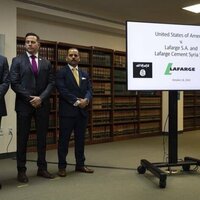
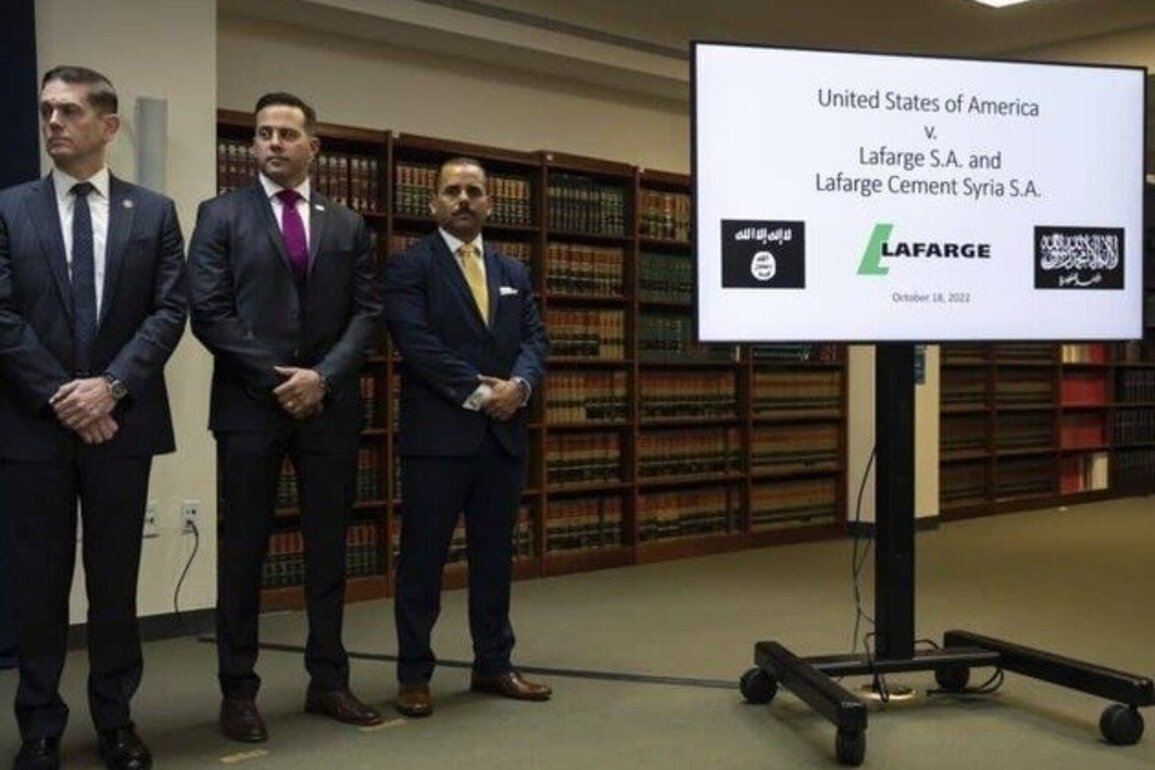
This is the first time a French multinational is on trial over funding terrorist organizations. But it's not the first time Lafarge has faced criminal liability - the U.S. Justice Department filed charges against Lafarge in 2022, and the company accepted a deal to plead guilty to one count of "conspiring to provide material support to terrorist groups." It paid $778 million in cash and assets to avoid a U.S. trial that year.
The plea deal prompted other lawsuits; in 2023, 427 Yazidi-Americans filed a lawsuit against Lafarge over conspiring to provide material support to a campaign of terrorism conducted by the Islamic State group against the Yazidi population.
The following year, a U.S. group of victims and families filed a complaint against Lafarge for violation of the Anti-Terrorism Act, also demanding a jury trial. They were affected by ISIS and the-then al Qaeda in Syria affiliate al-Nusra attacks committed abroad, like the Nov. 13, 2015, attacks in Paris and the Islamic State group suicide-bombing attack in Istanbul a year later, and sought compensation.
But in France, the plea deal adds an unusual dimension to the defense; under the U.S. agreement, Lafarge cannot contradict facts it has already admitted, even in foreign courts.
The U.S. guilty plea isn't the only evidence that could complicate Lafarge's defense. Email correspondence suggests multiple company executives were aware of its involvement with the Islamic State group and al-Nusrah, to whom prosecutors say the company paid an estimated $5 million for safe passage from 2013-2014.
In the U.S. complaint, prosecutors said Pescheux sent emails instructing employees to "stop [using] the acronym of an organization which is on terrorist lists" and instead replace the acronyms with code words.
"One of the reasons I believe why Lafarge is standing trial today is because there were leaks of those internal email exchanges," Lavit said. "Those emails are really showing that it was not only the subsidiary of Lafarge that was making its payment in full autonomy, it was a group policy that was mobilized in order for those payments, which were validated by the corporate executives and their headquarters."
Intelligence service ties?
Philippe Hardouin, a French economist, former Lafarge employee and author of "The Lafarge Affair in Syria and its Shadow Wars, said the key questions of the trial are: "Did Lafarge maintain its activity in Syria during 2013 and 2014 only to keep the business running in exchange for payments to terrorist groups, or did Lafarge maintain its activity to provide accurate and valuable information to the French services?"
Multiple sources say French intelligence services used the plant to obtain information about what was happening on the ground in Syria. Waerness - and later Jaloudi, who was a former member of Jordanian intelligence services - were successively hired as security directors of Lafarge's Syria plant by Jean-Claude Veillard, head of security at the Lafarge Group level, and a former member of France's special forces. Hardouin said they allowed Veillard to pass critical information and reports on to French intelligence services.
"I've provided a great deal of factual evidence in my book that there is a proven presence of French intelligence services within Lafarge and the cement plant in Syria," Hardouin said. "And there is a clear desire on the part of the state services to conceal this reality, which was ongoing cooperation between a few people within the Lafarge group, and in particular the director of security, with a full knowledge of payments in exchange."
On Thursday in Paris, Prevost-Desprez pressed Waerness as to whether he had a role of collecting information outside of his official position.
"No, not the way I see it," he replied. He later replied to a similar question with a straight, "No."
In 2015, Lafarge merged with Holcim, and was renamed the Holcim Group in 2021.
"This is a legacy Lafarge SA issue, which Lafarge SA is addressing responsibly through the legal process," a representative for Lafarge said about the current trial in an emailed statement. "It involves actions that occurred more than a decade ago and were in flagrant violation of Lafarge SA's Code of Conduct. None of the former executives who are standing trial as individuals are with Lafarge SA or any affiliated entities today."
The trial is expected to run until Dec. 19.
Source: Courthouse News Service