

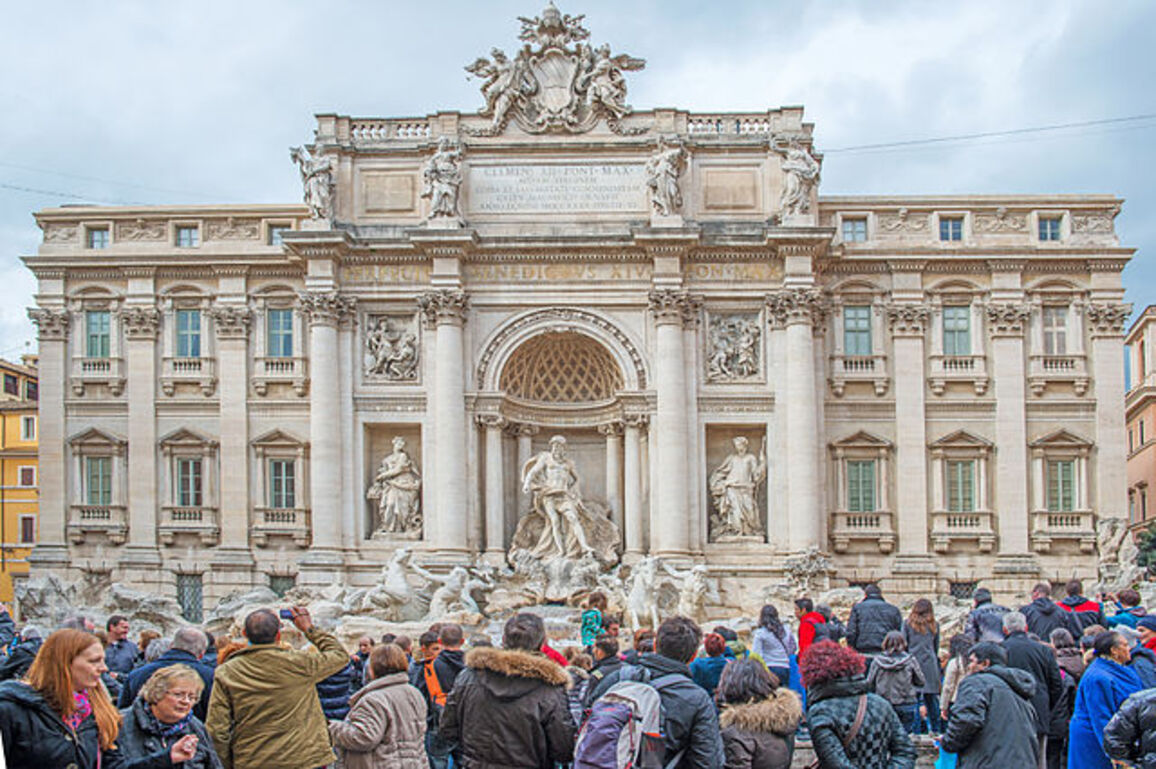
ROME, Italy: Rome is preparing to put a price on proximity to one of its most photographed landmarks, announcing that visitors who want to get close to the Trevi Fountain will soon have to pay an entry fee.
From February 1, tourists will be charged two euros (US$2.34) to access the stone steps surrounding the fountain's basin, Mayor Roberto Gualtieri said. The measure is expected to generate around 6.5 million euros annually.
"Two euros isn't very much ... and it will lead to less chaotic tourist flows," Gualtieri told reporters, adding that residents of Rome would continue to enjoy free access.
Under the plan, only visitors wishing to step onto the immediate perimeter of the fountain will be charged. The small square overlooking the monument will remain freely accessible, allowing passers-by to admire the site without paying.
The Trevi Fountain — where tradition holds that tossing a coin into the water ensures a return to Rome — has long been a magnet for tourists and visiting dignitaries alike. Completed in 1762, the late Baroque masterpiece depicts Oceanus, the god of water, and symbolises the changing moods of seas and rivers around the world.
Gualtieri said the fountain has already attracted nine million visitors so far this year. He suggested many future visitors may choose to admire it from a distance rather than pay for closer access.
Some tourists said they were comfortable with the idea if the proceeds were reinvested in preservation. "If it means that money is used to keep it maintained, then yeah, that's fine," said British tourist Yvonne Salustri.
The move is part of a broader push by city authorities to extract greater revenue from Italy's vast cultural heritage, especially as overtourism strains historic sites. Gualtieri said five other lesser-known attractions in Rome that are currently free will begin charging an entrance fee of five euros from February.
Rome has already tested paid access at major landmarks. In 2023, officials introduced a five-euro fee to enter the Pantheon, a decision that has often left the surrounding square crowded with visitors waiting to buy tickets.
Other Italian cities have taken similar steps. Venice has rolled out a tourist entry-fee system during peak travel periods in an effort to manage crowds, while Verona this month began charging visitors to access the balcony associated with Shakespeare's Romeo and Juliet.
Italian officials say such measures are increasingly necessary to balance preservation with mass tourism, as some of the country's most celebrated sites struggle to cope with ever-growing visitor numbers.