

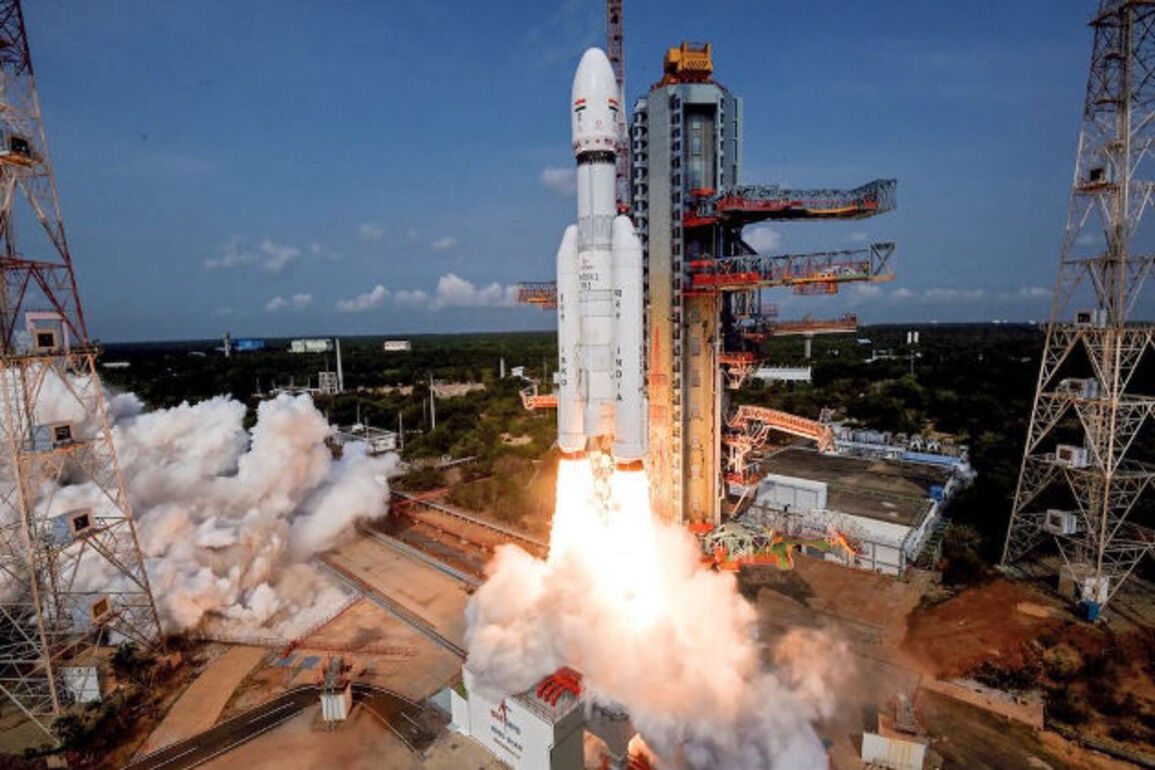
NEW DELHI, India: The Indian Space Research Organisation (ISRO) on December 24 launched a next-generation US communication satellite, BlueBird Block-2, onboard its heaviest vehicle, LVM3-M6, from the Satish Dhawan Space Station, Sriharikota, in the southern state of Andhra Pradesh.
The launch took place at 8:55 a.m. Indian Standard Time. After a flight journey of about 15 minutes, the spacecraft Bluebird Block-2 was separated from the vehicle and successfully placed into its intended orbit.
Speaking on the occasion, ISRO Chairman V Narayanan hailed the successful launch of the BlueBird Block-2 communication satellite of US-based AST SpaceMobile, calling it the heaviest satellite ever lifted from Indian soil using an Indian launcher. Narayanan highlighted that the satellite was injected into its intended orbit with precision, marking a significant achievement for ISRO.
The BlueBird Block-2 mission is part of a global network of low-Earth-orbit satellites that aims to provide direct mobile phone connectivity from space. The system is designed to support 4G and 5G calls, video, texts, streaming, and data services anywhere in the world.
The mission was conducted under a commercial agreement between NewSpace India Ltd (NSIL), the commercial arm of ISRO, and U.S.-based AST SpaceMobile.
LVM3-M6 was the sixth operational flight of ISRO's LVM3 rocket and the third commercial mission dedicated to launching a Blue Origin Block-2 satellite. The LVM3 rocket has a strong track record, with eight consecutive successful launches, including the Chandrayaan-2 and Chandrayaan-3 missions.
The LVM3-M6 / BlueBird Block-2 mission is a dedicated commercial launch using the LVM3 vehicle to place AST SpaceMobile's communication satellite into orbit. This flight marked the sixth operational launch of the LVM3.
The LVM3 rocket, developed by ISRO, had three stages: two solid strap-on boosters, a liquid core stage, and a cryogenic upper stage. It weighed about 640 tonnes at lift-off. In earlier missions, it has launched Chandrayaan-2, Chandrayaan-3, and two OneWeb missions carrying 72 satellites. Its previous mission, LVM3-M5/CMS-03, was completed on November 2, 2025.