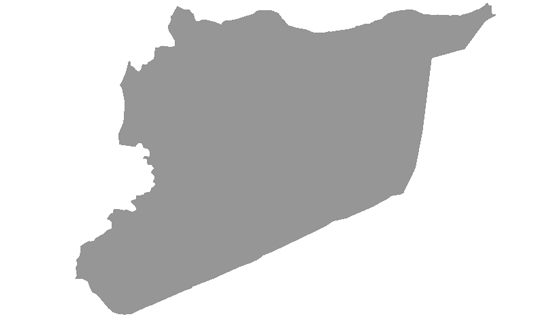


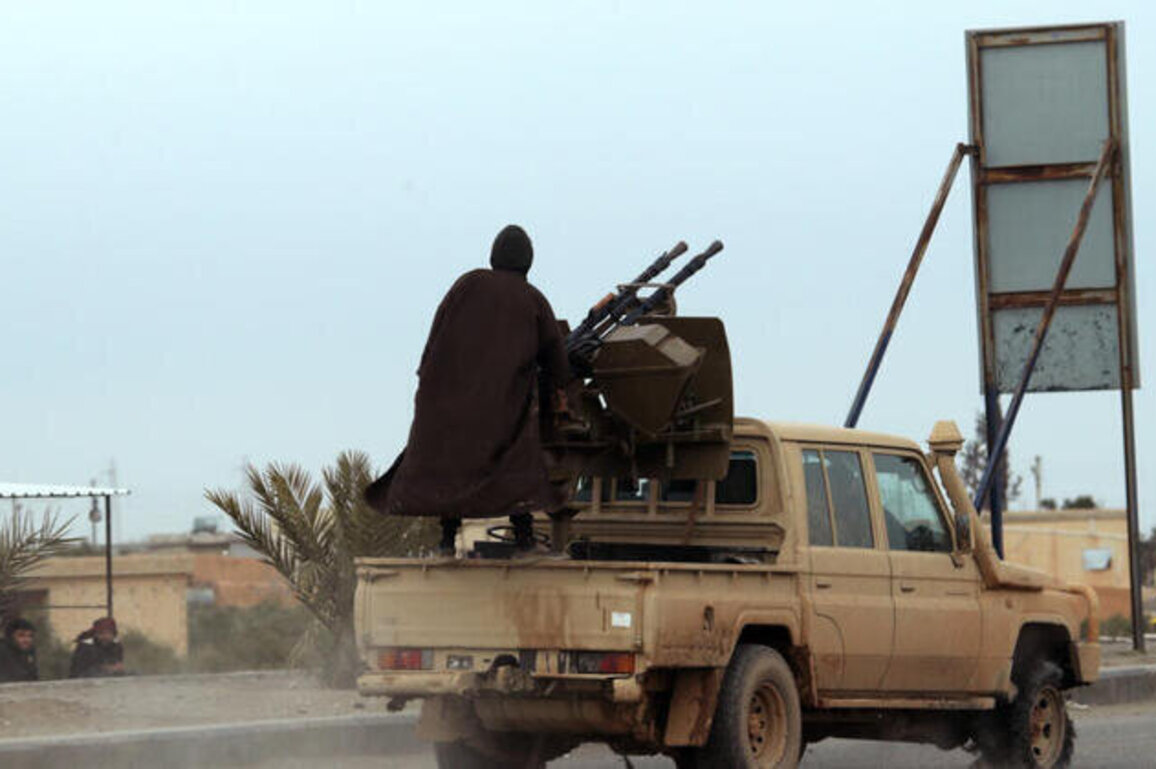
Syria's army has taken control of swathes of the country's north, dislodging Kurdish forces from territory over which they held effective autonomy for more than a decade.
The government appeared to be extending its grip on Kurdish-run areas after President Ahmed al-Sharaa issued a decreedeclaring Kurdish a "national language"and granting the minority group official recognition.
TheKurdshave said Friday's announcement fell short of their aspirations.
The army advanced after implementation of a March deal intended to integrate Kurdish forces into the state stalled.
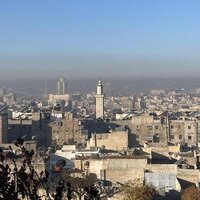
Government troops drove Kurdish forces from twoAlepponeighbourhoods last week and on Saturday took control of an area east of the city.
On Sunday, Damascus announced the capture of Tabqa city in the Raqa region.
"The Syrian army controls the strategic city of Tabqa in theRaqqacountryside, including the Euphrates Dam, which is the largest dam in Syria," Information Minister Hamza Almustafa said, according to the official SANA news agency.
An AFP correspondent in Deir Hafer, some 50 kilometres (30 miles) east of Aleppo city, saw several fighters from the Kurdish-ledSyrian Democratic Forces(SDF) leaving the town and residents returning under heavy army presence.
Syria's army said four soldiers had been killed, while Kurdish forces reported several fighters dead. Both sides traded blame for violating a withdrawal deal.
Read moreFor Syrias new rulers, Sunni clans hold the key to stability andending sectarian strife
Kurdish authorities ordered a curfew in the Raqa region after the army designated a swathe of territory southwest of the Euphrates River a "closed military zone", warning it would target what it said were several military sites.
A SANA correspondent reported Sunday that the SDF blew up a bridge over the Euphrates in Raqa city, which lies on the eastern bank of the river.
Raqa city's water supply was also reportedly cut off. The city's media directorate accused the SDF of blowing up the main water pipes.
Deir Ezzor governor Ghassan Alsayed Ahmed said on social media that the SDF fired "rocket projectiles" at neighbourhoods in government-controlled territories in the city centre of Deir Ezzor, Almayadeen, and other areas.
The SDF, for its part, said "factions affiliated with the Damascus government attacked our forces' positions in the towns of Gharanij, Abu Hammam, Alkishkiyah, Aldhiban, and Altayyanah leading to fierce clashes between our forces and those factions, which are still ongoing".
The towns are on the east bank of the Euphrates, opposite Al-Mayadin, and lie between Deir Ezzor and the Iraqi border.
In eastern Syria, government forces also seized the Omar oil field the countrys largest and the Conoco gas field, three security sources said on Sunday.
Calls for de-escalation
On Friday, Syrian Kurdish leader and SDF chief Mazloum Abdi had committed to redeploying his forces from outside Aleppo to east of the Euphrates.
But the SDF said Saturday that Damascus had "violated the recent agreements and betrayed our forces", with clashes erupting with troops south of Tabqa.
The army urged the SDF to "immediately fulfil its announced commitments and fully withdraw" east of the river.
The SDF controls swathes of Syria's oilrich north and northeast, areas captured during the civil war and the fight against the Islamic State group over the past decade.
US envoy Tom Barrack met Abdi in Erbil on Saturday, the presidency of Iraq's autonomousKurdistanregion said.
While Washington has long supported Kurdish forces, it has also backed Syria's new authorities.
Watch moreAmid continued sectarian violence, Syrians face mass displacement
US Central Command on Saturday urged Syrian government forces "to cease any offensive actions in the areas between Aleppo and alTabqa".
France's PresidentEmmanuel Macronand Iraqi Kurdistan leader Nechirvan Barzani also called for de-escalation and a ceasefire.
'An essential and integral part' of Syria
Sharaa's announcement on Friday marked the first formal recognition of Kurdish rights since Syria's independence in 1946.
The decree stated that Kurds are "an essential and integral part" of Syria, where they have suffered decades of marginalisation.
It made Kurdish a "national language" and granted nationality to all Kurds around 20 percent of whom were stripped of it under a controversial 1962 census.
The Kurdish administration in Syria's northeast said the decree was "a first step" but "does not satisfy the aspirations and hopes of the Syrian people.
In Qamishli, the main Kurdish city in the country's northeast, Shebal Ali, 35, told AFP that "we want constitutional recognition of the Kurdish people's rights".
Nanar Hawach, senior Syria analyst at the International Crisis Group, said the decree "offers cultural concessions while consolidating military control".
Also Saturday, theUS militarysaid a strike in northwest Syria had killed a militant linked to a deadly attack on three Americans last month.
(FRANCE 24 with AFP)
Originally published on France24