

“Lebanon is exhausted by other people’s wars”, the Security Council heard today during a briefing on the country, as Iran and Israel were urged to stop fighting their war in its territory.
Tom Fletcher, Under-Secretary-General for Humanitarian Affairs and Emergency Relief Coordinator, said that Lebanon “is not asking for help, but for oxygen.” Its particular place “on the map and in history” means geopolitical tremors ricochet through it like earthquakes.
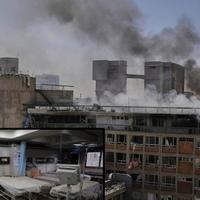
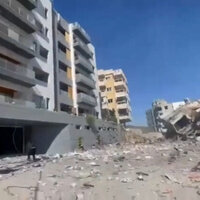
Over 570 people are reported killed, and over 1,400 injured since 2 March, while mass displacement is accelerating, with over 750,000 people now registered as on the move. Schools have been forced to close as temporary shelters, disrupting learning for tens of thousands of children. The UN and its partners have distributed 500,000 hot meals and 270,000 litres of bottled water. “But our ability to reach people is tightening by the day,” as large areas of south Lebanon remain active conflict zones, he warned.
Highlighting the first of “three asks”, he underscored that civilians throughout the region must be protected. “Second, we need generous funding for a principled, scaled-up humanitarian response,” he said, noting that “reportedly, a billion dollars a day” is being spent on destruction. “With a fraction of this money, we can save millions of lives globally.” Finally, “we need calmer heads to prevail”, he said, noting the sustained attack on the very systems meant to restrain States from reckless warfare. Offering “a simple test for your actions”, he asked: “If your opponent were doing this to you, what would you say?”
Hizbullah Attack on Israel Draws Lebanon into Conflict
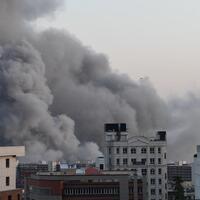
Rosemary DiCarlo, Under-Secretary-General for Political and Peacebuilding Affairs, said “the decision by Hizbullah to attack Israel on 2 March has again drawn Lebanon into a conflict it neither sought nor can afford”. The group has since fired hundreds of projectiles into Israel and the occupied Syrian Golan. “Israel, in turn, has carried out extensive strikes in southern Beirut, across southern Lebanon and in the Bekaa and Baalbek regions,” she said, noting that these operations have “reportedly killed” over 570 people.
After the November 2024 cessation of hostilities, Lebanon took “historic and courageous steps” and was developing a plan to establish exclusive State control over weapons, she said. Hizbullah refused to cooperate with these efforts while the Israel Defense Forces conducted near-daily strikes on alleged Hizbullah targets in Lebanon. On 9 March, Lebanon President Joseph Aoun affirmed Beirut’s readiness for direct negotiations with Israel, she noted, recalling his Cabinet’s decision prohibiting Hizbullah’s military and security activities. Hizbullah must cease its attacks on Israel and Israel must halt its military campaign in Lebanon and withdraw its forces from Lebanese territory, she stressed.
Jean-Pierre Lacroix, Under-Secretary-General for Peace Operations, warned the Council that the “fragile situation” in Lebanon since November 2024 has now become a “significant escalation of hostilities”. The United Nations Interim Force in Lebanon (UNIFIL) remains on the ground implementing its mandate “as far as the security circumstances allow”. Hizbullah has carried out daily strikes across the Blue Line, and Israeli forces have intensified strikes and issued displacement orders across UNIFIL’s area. Since 1 March, UNIFIL has reported some 4,120 trajectories and 323 air attacks by the Israel Defense Forces, and peacekeepers themselves have come under threat.
Lynn Harfouch, Executive Committee Member, Lebanese National Bloc Party, told the Council that her country was once again dragged into war by Hizbullah, “a militia that answers to interests beyond the Lebanese borders”. Speaking as someone who grew up supporting them, she said the “mask fell” after the 2006 war, when Hizbullah celebrated “our collective ruin” and used resistance as “a mere facade” for an expansionist project.
The cost of this unending war is borne not by leaders in protected bunkers, but by the mother carrying two sleeping children, the elderly and families displaced into “cars, sidewalks or overcrowded shelters”. This is a crisis of sovereignty and accountability, she said, urging support for the Lebanese Armed Forces as “the sole legitimate defender of the country”. Speaking as a mother, she recalled her son asking: “Why can’t we live in peace?” Her closing plea: “Let my people live.”
Lebanon Calls for Full Truce, Direct Negotiations with Israel
“We will not allow Lebanon to be turned into an arena for settling scores,” that country’s delegate stressed, noting that it is trapped between Israel, which shows no respect for the laws of war and Hizbullah, whose military and security activities have been prohibited by his Government. “In our modern history, no Lebanese Government has demonstrated this much courage and determination” to restore State authority, he said.
“Every morning, we awaken to new numbers of innocent victims — including women and children — and to evacuation warnings for entire areas,” he said, adding: “It is our right to live in peace and security in our homeland.” His country is willing to enter negotiations with Israel, he said, calling for international support to implement his President’ initiative to establish a full truce, expedite urgent logistical support to the Lebanese Armed Forces and launch direct negotiations.
In parallel, he underscored, the Council must oblige Israel to fully withdraw behind internationally recognized borders, release Lebanese detainees and stop threatening Lebanon’s unity and independence.
Israel Will Dismantle Hizbullah if Lebanon Fails to Restrain Group
Either the Lebanese Government takes “real action to restrain Hizbullah”, or Israel, that country’s delegate said, will use its strength to dismantle it. Since 2 March, Hizbullah has launched “wave after wave of attacks”, including more than 880 rockets and missiles, drones and anti-tank missiles — not “to defend Lebanon”, but “to serve the agenda of the Iranian regime”, he said. Israeli families are again “running to bomb shelters”, which is why Israel is operating in Lebanon “to stop this threat”, he added. He described Hizbullah as a “proxy army” that grew into one of the world’s most heavily armed non-State groups, with up to 150,000–200,000 rockets and missiles, built for “one purpose — Israel’s destruction”.
Though Israel had previously eliminated Hizbullah’s senior leaders and degraded much of its arsenal, he said, the group rearmed, restocked and rebuilt with Iranian backing. “Tehran funds it, Tehran arms it, Tehran directs it,” he said, adding: “Hizbullah pulls the trigger, but the Ayatollahs in Tehran pull the strings”.
The representative of the United States described Lebanon’s 2 March decision to immediately prohibit Hizbullah’s security and military activities as “historic”. Lebanon’s security forces must implement this decision. “Take your country back,” he said.
Hizbullah does not represent or defend the people of Lebanon, it defends the Iranian regime, he said. Recognizing Israel’s legitimate security needs and right to defend itself, he asked: “How long will the world continue to tolerate the Iranian regime, as the world’s largest State sponsor of terrorism?” Washington, D.C., is taking bold action to rid the world of “this disease of instability and chaos”, he said, stressing that Lebanon must expel members of the Iranian Revolutionary Guard Corps.
Syria’s delegate condemned the bombing of Lebanon, while welcoming Beirut’s decision to ban Hizbullah’s military activity and require it to hand over weapons to the State. His country and Lebanon have adopted a “new approach” based on mutual respect and common interest — Syria has strengthened forces along its borders with Lebanon and Iraq as a precaution. At the same time, he also condemned ongoing Iranian attacks against Gulf countries, Jordan and Iraq, and called on the Council to compel Israel to end its attacks on Lebanon.
Lebanon is not a distant issue for us, Cyprus’ delegate said, calling for restraint and protection of civilians. Condemning Hizbullah’s attacks against Israel, she acknowledged that country’s right to self-defence, while expressing concern about the intensification of its military operations and the resulting mass displacement.
Calls for De-Escalation, Protection of Peacekeepers in Lebanon
France’s delegate was among those who condemned “deliberate attacks against UNIFIL” — three Ghanaian peacekeepers were injured on 6 March. His country is continuing its exchange, with the Lebanese and Israeli authorities, to achieve de-escalation. It is crucial to intensify support for the Lebanese Armed Forces, which are tasked with disarming Hizbullah, he said, adding that Paris will organize — as soon as conditions allow — an international conference on this.
Lebanon’s security is a “shared regional and international interest”, Bahrain’s delegate said, welcoming the ban on Hizbullah’s security and military activities. The representatives of the United Kingdom, Denmark and Greece also condemned Hizbullah for dragging the Lebanese people into a bloody conflict. “It only brings more suffering to the civilian population,” Latvia’s delegate added. Speakers from Panama and Somalia stressed the need to protect civilians, aid workers and peacekeepers. Pakistan’s delegate called for Israel’s immediate withdrawal from Lebanon’s occupied territories while Colombia’s speaker said that Lebanon’s territorial integrity is not up for debate.
The Russian Federation’s delegate called Lebanon’s crisis part of a wider United States and Israel escalation against Iran. Israel’s response in Lebanon is “disproportionate and excessive”, she said, noting the destruction of the Russian Cultural House in Nabatieh. “The continuation of hostilities serves no party,” said China’s delegate, urging the international community to increase humanitarian assistance for Beirut.