

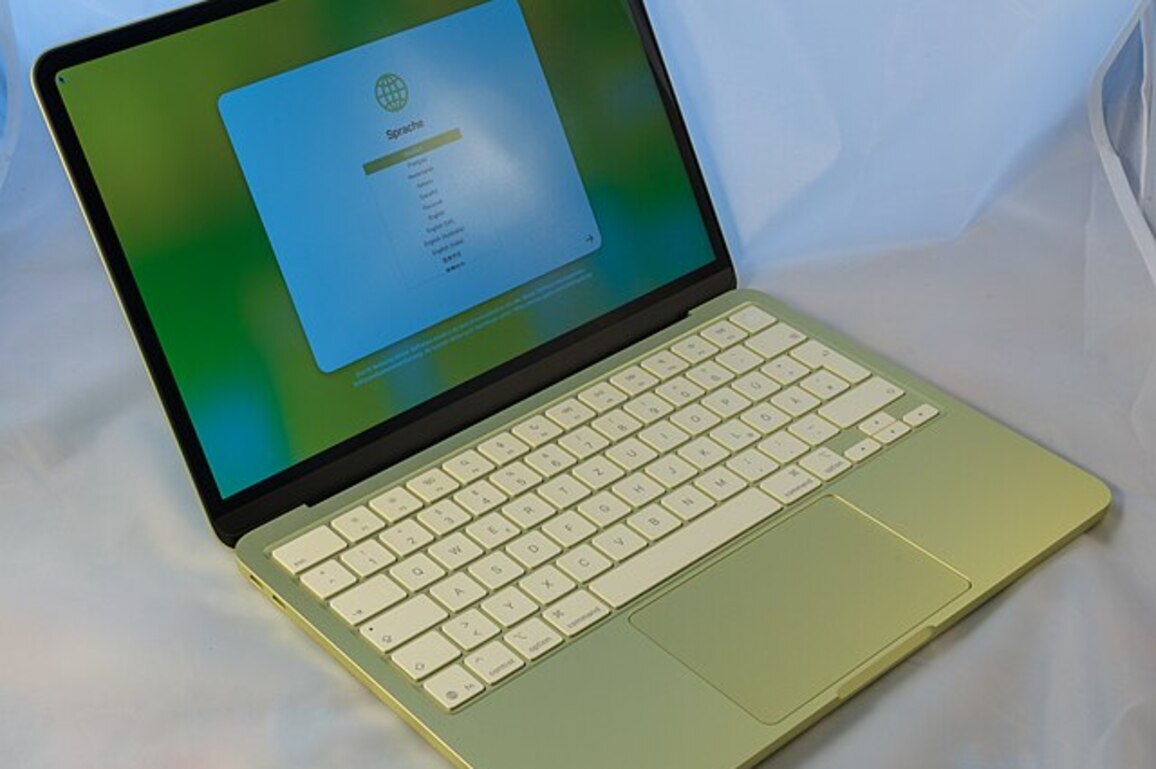
SAN FRANCISCO, California: Apple's newly announced MacBook Neo, a low-cost laptop aimed at students, is the most repairable notebook the company has released in more than a decade, according to an analysis published Friday by repair website iFixit.
The MacBook Neo, unveiled last week with a starting price of US$499 for students, received the company's highest repairability rating since 2014 in iFixit's latest teardown.
iFixit publishes repair guides and sells tools and replacement parts for consumer electronics, while also rating how easy devices are to repair. Laptop makers, including Dell Technologies and Lenovo, have used the ratings to improve the repairability of their products.
In its teardown report, iFixit said Apple introduced several design changes compared with earlier MacBook models. The company attached the battery and keyboard with screws rather than glue or rivets, making components such as the camera and fingerprint sensor easier to replace.
Apple is widely believed to be targeting the education market with the MacBook Neo, competing with low-cost Chromebooks from Google.
Kyle Wiens, iFixit's chief executive, said Chromebooks are frequently repaired, with some school districts, including those in Oakland, California, even employing student interns to repair them.
Despite the improvements, the MacBook Neo still received only a 6 out of 10 on iFixit's repairability scale. Competing laptops, such as some Lenovo ThinkPad models, have scored nine or ten.
Apple has long prioritised thinner and lighter designs, which have often made its devices harder to repair.
Apple did not immediately respond to a request for comment.
Wiens said one major limitation is that the MacBook Neo's 8 gigabytes of DRAM memory are soldered directly onto the circuit board alongside the device's main processor — a design used in Apple's recent Mac computers.
That configuration prevents users from easily upgrading memory in the future.
Wiens said the limitation could make it harder for the MacBook Neo to run increasingly complex artificial intelligence applications, even as Apple emphasises the privacy advantages of running AI tasks directly on devices rather than in the cloud.
"Apple's future for privacy-centered AI has to be local models," Wiens said. "I would argue this is a flaw across Apple's entire Mac product line."