

Georgias State Security Service has launched an investigation into claims that Iran is expanding its influence in the country through Georgian Shi'ite communities, growing concerns about Tehrans religious and political outreach in the South Caucasus country.
The probe follows a report by the Hudson Institute, a Washington-based think tank, and public statements by opposition politicians alleging Iran has been building networks of influence in Georgia, particularly among ethnic Azerbaijani Shiite communities in the southeastern Kvemo Kartli region.
SEE ALSO:
Thousands Of Iranian Companies Operating In Georgia Amid Sanctions Evasion Concerns
It also comes at a time when Georgias foreign policy orientation has become increasingly contested. Once Washingtons closest ally in the South Caucasus, Georgia, under its current government, has increasingly distanced itself from the West while strengthening ties with Russia, China, and Iran.
Iran's intent, according to the Hudson Institutereportpublished March 4, is to "groom the next generation of Georgian Shi'ite leaders, foster loyalty to Iran's political theology, and normalize anti-American narratives."
Economic ties between Georgia and Iran have also drawn scrutiny.
Nearly 13,000 Iranian-linked companies are registered in Georgia, many associated with only a handful of addresses -- a pattern analysts say raises concerns about possible sanctions evasion.
Someinvestigatorssay Iranian firms may be using Georgia as a transit point to bypass international restrictions, with certain companies reportedly linked to Irans armed forces.
Georgias State Security Service told RFE/RL the claims about Irans outreach contradict available evidence and said authorities are examining the motivations behind the accusations.
Speaking to journalists, Tbilisi Mayor Kakhi Kaladze -- a top official in the ruling Georgian Dream party -- accused former Defense Minister Tina Khidasheli of committing a traitorous act for recent statements on the issue.
Kaladze also lashed out at former MP Giorgi Kandelaki, a political activist and co-author of the Hudson Institutereporttitled Georgias Iranian Turn: Tehrans Rapid Expansion of Influence in a Once-Committed US Ally.
The Hudson Institute said in a statement that it condemned the governments investigation into the authors of the report, which it said should serve as a wake-up call for Georgian authorities.
SEE ALSO:
Once Washington's Closest Caucasus Partner, Georgia Watches Vance Visit From The Outside
"This report should serve as a wake-up call -- especially at a time when Iran serves as a destabilizing force in the region," John Waters, the think tanks president, said in astatementon March 9.
"Rather than investigating the authors of the report, Georgian authorities should be concerned by its findings, which rely overwhelmingly on publicly accessible information that the authorities should already be aware of," he added.
Shiite activism in Georgia dates back to the late 1980s when Soviet borders opened and Muslim populations in the Soviet republics began reconnecting with religious institutions abroad, according to Aleksandre Kvakhadze, a researcher specializing in the Caucasus and terrorism at the Georgian Foundation for Strategic and International Studies (GFSIS).
Amid tightened religious policies in Azerbaijan, Georgia offered a much freer environment with fewer restrictions, allowing Shiite groups to extend their influence more widely, shesaid.
Much of the focus of public debate in Georgia has centered on activities linked to Al-Mustafa International University, a global network of Shiite seminaries headquartered in the Iranian city of Qom.
Al Mustafa University in Georgia
The institution wassanctionedby the United States last year amid allegations that it recruited Afghan and Pakistani students to fight in the Syrian conflict.
The university operates in several Georgian cities with large Azerbaijani populations.
RFE/RL was unable to trace the full network of the universitys alumni in Georgia, though some former students are believed by analysts to work as mosque leaders, lecturers, or cultural activists.
Among the Shi'a in Georgia, there is sympathy for Iran. It would not be objective to deny that, Oktay Kazimov, a former teacher at Al-Mustafa, told RFE/RL.
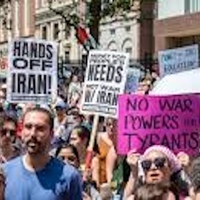
The issue has taken on extra life with the launching of the US-Israeli military campaign against Iran.
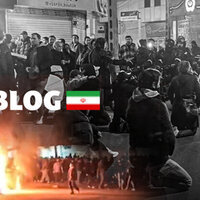
Many Iranian Shi'a have reacted sharply to the killing of Supreme Leader Ayatollah Ali Khamenei during the initial wave of air strikes on February 28.
Khameneis death prompted a group of demonstrators to gather in front of the Iranian Embassy in Tbilisi, holding images of the slain leader and chanting: I am ready to carry out your order.
Irakli Kobakhidze, head of the Georgian Dream government, who is known for his anti-Western statements, compared the gathering to ongoing pro-European demonstrations outside the Georgian parliament.
A hundred people gather in front of the Parliament of Georgia and make statements against the Georgian state. All of this needs to be managed, he said.
Public displays of pro-Iranian sentiment have also appeared in parts of Kvemo Kartli, a region south of Tbilisi bordering Azerbaijan and Armenia and home to much of Georgias ethnic Azerbaijani population.
Iranians have long been present in Kvemo Kartli, but under the Georgian Dream their presence has grown and become more visible, Georgian political analyst Giorgi Sanikadze told RFE/RL.
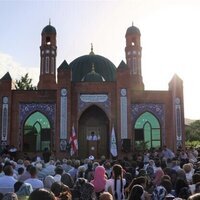
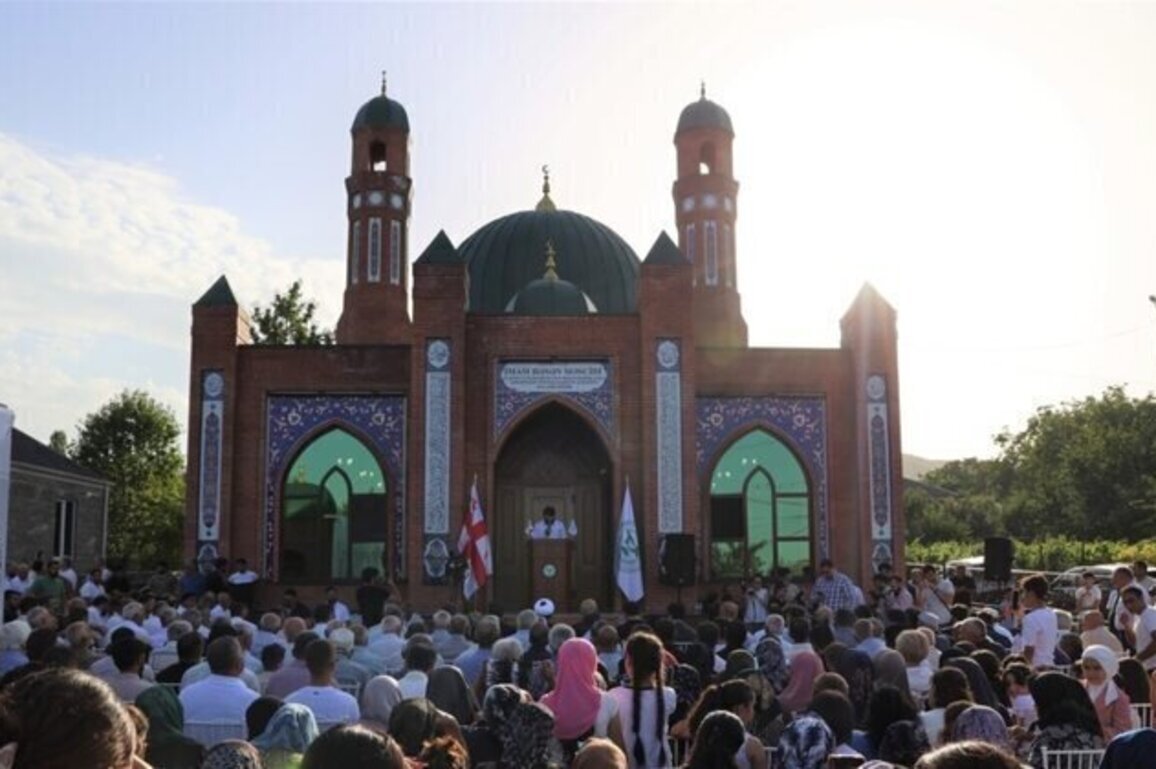
The pulse of Georgias Shiite community can often be taken at the Imam Reza Mosque in the city of Marneuli. The mosque is a major Shi'ite religious site and community hub for the local Azerbaijani population.
Orchestrating Violence
Themosquemade headlines in February when it issued a statement accusing the United States and its Western allies of orchestrating violence across the Middle East. It blamed Washington and Israel for conflicts in Syria, Iraq, Gaza, Afghanistan, and Yemen, while describing those killed in recent protests in Iran as rebels against the Islamic order.
I can also see Iranian influence increasing in Kvemo Kartli among Azerbaijanis, but it is not as high as some Georgian politicians and civil-society leaders claim. It is limited to a small group of people, Rabil Ismail, a civic activist from Kvemo Kartli, told RFE/RL.
At the same time, I see hate speech against Azerbaijanis increasing on social media. This is a sensitive issue and could harm peace among Georgias communities. As a community, we do not want any country -- including Iran --interfering in Kvemo Kartli, he added.
Recent security incidents have also drawn attention to possible Iranian-linked activities connected to Georgia.
On March 2, Greek police detained a 36-year-old Georgian citizen at Athens airport on suspicion of spying for Iran. While authorities have released few details, a Georgian media outletreportedthat the suspect is an ethnic Azerbaijani from Georgia. RFE/RLs Georgian Service could not verify the claim.
Experts also look back to last year when Georgian-born crime boss Polad Omarov was foundguiltyof participating in a 2022 plot to assassinate US-based Iranian journalist Masih Alinejad in New York.
RFE/RLs Georgian Service hasreportedthat Omarov is ethnic Azerbaijani.
Investigation Highlights Iran's Growing Footprint In Georgia
Share
ShareCopy link
Facebook
X (Twitter)
LinkedIn
Email
Share
ShareCopy link
Facebook
X (Twitter)
LinkedIn
Email