

Carlos Frederico Pereira da Silva Gama
Download PDF
Mar 19 2026
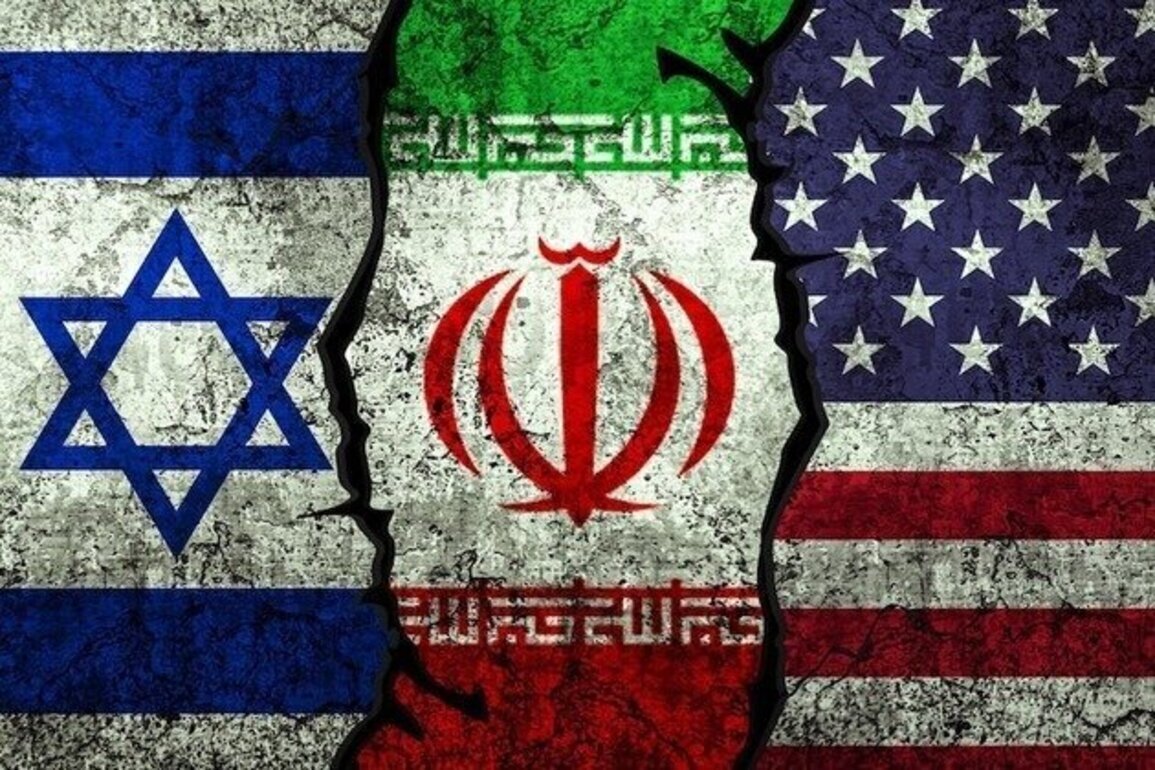
visuals6x/DepositphotosOn February 28, 2026, Iran suffered coordinated missile attacks from Israel and the United States. The breakdown of diplomatic negotiations on the Iranian nuclear program was followed by heavy bombing of civilian infrastructure and military sites. The assault on Teheran victimizeda girls school(with more than 170 casualties) as well as the highest echelon of the Islamic Republics administration including its Supreme Leader, 86-year-oldAyatollah Ali Khamenei, who was in office since the Cold War, in 1989. This event provided the apex to a 3-year long war of mutual attrition between the regional powers, ignited by unprecedented missile attacksin April 2024.The entrance of the US into the conflict in 2025, so far, has not proved decisive. In spite of President Donald Trumps declarations that the US bombing of Iranian nuclear facilities during 2025s 12-day warobliteratedthe Islamic Republics nuclear program, diplomatic negotiations on the nuclear issue were still under way in the weeks leading to the February 28 attack. In hindsight, the latest Trump declarations stating that US attacksdecimatedIranian military capacities shall be similarly taken with a pinch of salt.
Undoubtedly, this kind of unfinished business proved enormously costly to West Asia. Since 2024, neighboring countries have constantly been under fire from either Israeli or Iranian air bombing. From Trkiye to Oman, casualties are counted in thousands, and the destruction of civilian infrastructure claims a lofty price. Once the regional conflict unfolds in a globalized world, the side-effects of Israeli-Iranian confrontation flow acrosstranscontinental networks of interdependence, bringingglobal turbulenceand upheaval.Oil prices on the rise, the disruption ofsupply chainsandtransportationare the most visible faces of globalized collateral damage, posing a heavy burden for a fragmented world.The closure of the Iranian side of the Strait of Hormuzplaced the global economy under force majeure.
The closure of Hormuz reveals a regime facing an existential threat. Theselective killings of Iranian proxiesin West Asia by Israel since 2024 undermined the leadership of Hamas and Hezbollah. Before the murder of ageing Ayatollah Khamenei, Iran already hadlost President Ebrahim Raisi in a helicopter accidentnear Azerbaijan (May 19, 2024). The new Supreme Leader Ayatollah Mojtaba Khamenei (son of the deceased leader) was reportedly injured by Israeli bombings and did not appear in public ever since. Before the war, demonstrations filled the largest cities in Iran, demanding a way out of economic grievances enhanced by international sanctions and calling for an opening of the regime. This provided a window of opportunity for Trump threats, followed by condemnation by the European Union plus new sanctions. Even though Trump called Iranians torebellion, foreign aggression may actually reinforce the regime. Instead of a prolonged succession crisis, the killing of Khameneibrought a new martyr to the revolutionary pantheon. A billionaire campaign of air bombing cannot assure regime change alone.
Military interdependence between Western powers and West Asia regional players also proved costly. Under the fog of war,six US servicemenand aFrench peacekeeper(located in an Italian base) were killed in Iraq. US military bases in Bahrain, the UAE, Qatar and Saudi Arabia become preferential targets of Iranian missiles as well as NATO facilities in Cyprus and Trkiye. Lebanon was brought to the battlefield by Israeli bombings a common occurrence since 2024 followed by Hezbollah reprisals. Trump promised to escort tankers through the Strait of Hormuz. After Iran started mining this strategic hub, the US President backed off this promise and called uponfriendly nations to keep the strait open.
As the diplomatic front collapsed, the dynamics of world politics played out in cautious fashion. The United Nations Secretary General Antonio Guterres made reiterated calls for the end of conflict, to no avail, followed by Pope Leo XIV. Iran recently joined the BRICS+ group however, the Global South allianceremained silent on the war. Major Iranian allies outside West Asia stood on the sidelines. Russia benefited from the sudden hike in oil prices by provisionally resuming its own embargoed exports. Vladimir Putin also offeredto mediate a deal with Iran, attempting a trade-off with the West on the standoff war in Ukraine. Vulnerable to the interruption of West Asia oil supplies, China invested in thediplomatic rhetoricof territorial integrity and international law. India maintained a low profile, keeping diplomatic channels open with both sides of the war divide. Among the few vessels crossing Hormuz in Marchtankers heading to India were allowed to go ahead.
Caught in the crossfire, the European Union hesitated between supporting the US-Israeli war effort with their military bases, condemnation of the Iranian regime on grounds of democracy and Human Rights or repudiating the war. The political lines that divide Europe came to the forefront, evidenced by a speech from President of EU Commission Ursula Von der Leyen, in which she declared the end ofEuropean custodyover a rules-based world order in the wake of February 28. After Iranian attacks on Cyprus, the United Kingdom reluctantly acquiesced toyield US use of military bases, although Prime Minister Keir Starmer highlighted this war wasat odds with international law. Amidst domestic regional elections, French President Emmanuel Macron offered his good officesto mediate talks between Israel and Lebanon; Spanish Prime Minister Pedro Sanchez made headlines running the flag forno war(Spain is a NATO member and sent a frigate to protect Cyprus).
As the EU attempts to sustain a rules-based order, albeit reluctantly, the US under Trump openly challenges multilateral arrangements. This contrast between traditional allies brings more anxiety to the outcomes of the ongoing war in West Asia, as well as additional complexity to the task of framing global governance amidst the debris from this conflict.
The context of the US attack on Iran contrasts with previous American interventions in the Middle East after the end of Cold War. Differing from 1991sGulf Warand 2011 NATOshumanitarian interventionin Libya, Donald Trumps ongoing military action dispensed with multilateral authorization and preceded the formation of multinational coalitions. The latter element also sets apart the current course of action from 2003s occupation of Iraq. Trumps appeal to friendly nations to provide military protection to the Strait of Hormuz is a sign that acoalition of the willingis missing in action in 2026 (even NATO members refrained from answering this call). In this sense, a peculiar kind of US interventionism is playing out in West Asia. In 2025, the US supported Israeli attacks on Iranian nuclear facilities, joining an ongoing conflict. After unfruitful rounds of nuclear negotiations lead to another stalemate, the US and Israel launched a joint strategic bombing campaign oriented at regime change in Iran.
It is no longer the case that the United States a military superpower is waging war in the Middle East relying on its own devices to trigger regime change in hostile countries.Burden sharingschemes with traditional allies (channeled through military alliances or coalitions of the willing) also look out of the frame. US foreign policy seems captured by the whims of the Israeli regime a phenomenon already exploredelsewhere. However, we depart from the expectation that the US under Trump is just playing second fiddle to Benjamin Netanyahu in the Middle East. The ongoing intervention is a piece of a growing puzzle of international initiatives that marked the MAGA leaders second administration, in tandem with other foreign policy decisions and departing from selective affinities with Israel. Conversely, we highlight that Israel attacked other countries in recent years (such as Syria and Lebanon) without overt US military support.
What single-handles Iran as a relevant part of MAGAs foreign policy bricolage is the possibility of sending systemic shockwaves across the global economy in a way that may, eventually, benefit the US, a challenged superpower recalcitrant to assure the provision of collective goods to allies (in contrast with US Cold War posture and with the unipolar moment). The Iranian regime as well as Chavismo in Venezuela, or multilateral trade regulations poses no existential threat to the US. However, Iran provides an opportunity for the Trump administration to turn the tide of globalization by micro-managing oil prices. The same logic applies tothe takeover of Nicolas Maduro in Venezuelaand theimposition of sweeping trade tariffsover allied countries and adversaries alike. Therefore, the corollary of foreign policy decisions is neither regime change northe promotion of democracy, rather getting favorable deals from smaller powers through a combination of displays of military strength, action through normative loopholes and the mobilization of multilateral institutions. We conceptualized this conception of US foreign policy asdiffuse unilateralism, in contrast with multilateralismsdiffuse reciprocity.
This foreign policy doctrine foregoes bureaucratic channels (domestic and international ones) attempting to promote the maximization of American prosperity in a thriving global economy by avoiding the pitfalls of prolonged institutional investment. In contrast with previous episodes of regime change, statebuilding and imperial occupation, Trump leads a US foreign policy on the cheap. Strategic bombing never implies boots on the ground.A combination of Special Forces and military apparel was enough to capture Maduroand pave the way for oil-focused deals with remainders of Chavismo. Institutional investment remains locked-up to a minimum level, with bodies such as the United Nations Security Council relegated topost-facto subscribing to Trumps ceasefire initiatives in Gaza.
In historical perspective, diffuse unilateralism is not an outlier. Rather, it isthe net sum of disruptions in world order brought by US-led interventionismafter the end of Cold War. Across the 21st century, the US decoupled from a Liberal International Order it helped create and institutionalize. After the brief unipolar moment, American foreign policy increasingly acknowledged that a challenged superpower would play lesser roles in a bigger world, as other centers of influence rose to prominence. Trying to roll back the rules reinforces the US status as a superpower with fewer strings attached, at the expense of the systems functionality. By avoiding institutional channels, binding agreements and shunning reciprocity, the US extracts maximum short-term benefits from selective deals with smaller powers in a dysfunctional world order marked by autarchy, fragmentation, declining institutions and enhanced competition.
With the US decoupling from LIO, the European Union became its normative beacon. Nevertheless Europe is lacking capacity to overtly enforce the order and is split across antagonistic tasks (norms entrepreneurship, the maintenance of world order and regional integration). The erosion of post-Cold War arrangements was not presided over by revisionism, rather by a growing gulf between major victors and beneficiaries of 1989. Once diffuse unilateralism sets in, divergent normative repertoires keep the LIO in a limbo. The end of a rules-based international order washighlighted recentlyby Canadian Prime Minister Mark Carney. The breakdown of the Atlantic alliance and Global Souths cautiousness rendered the international landscape more fragmented and less prone to cope with the globalized effects of the ongoing war in West Asia which does not qualify as a world war. In a fragmented world of weakened institutions, global governance pays the price of collective inaction as globalized consequences are dealt with individually.
Further Reading on E-International Relations
- Iran at a Historical Crossroads
- Great Power Rivalry and Israeli Selective Neutrality: Walking Between the Drops
- Irans West Asian Neo-Empire: Armed and Ready
- War of Distraction in Iran: Existential Anxiety and Strategic Failure
- The US-Iran-China Nexus: Towards a New Strategic Alignment
- The IRGC at a Crossroads: Strategic Lessons from the June 2025 Israel-Iran War
About The Author(s)
Carlos Frederico Pereira da Silva Gamais Assistant Professor of International Relations and Governance Studies at Shiv Nadar Institution of Eminence (India). He was Associate Professor of International Relations and Director of International Affairs at Universidade Federal do Tocantins (Brazil, 2015-2024), Visiting Scholar at Al Akhawayn University in Ifrane (Morocco, 2019), Associate Professor of International Relations (IRI/PUC-Rio, Brazil, 2008-2015) and Vice Coordinator of the BRICS Policy Center (2010-11).
TagsIranIran WarLiberal Order