

Whilea modern-day warhas focused the world's attention onIran, forFrencharchaeologist Franois Desset it was a millennia-old mystery that drew him to the country.
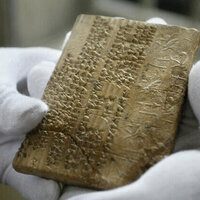
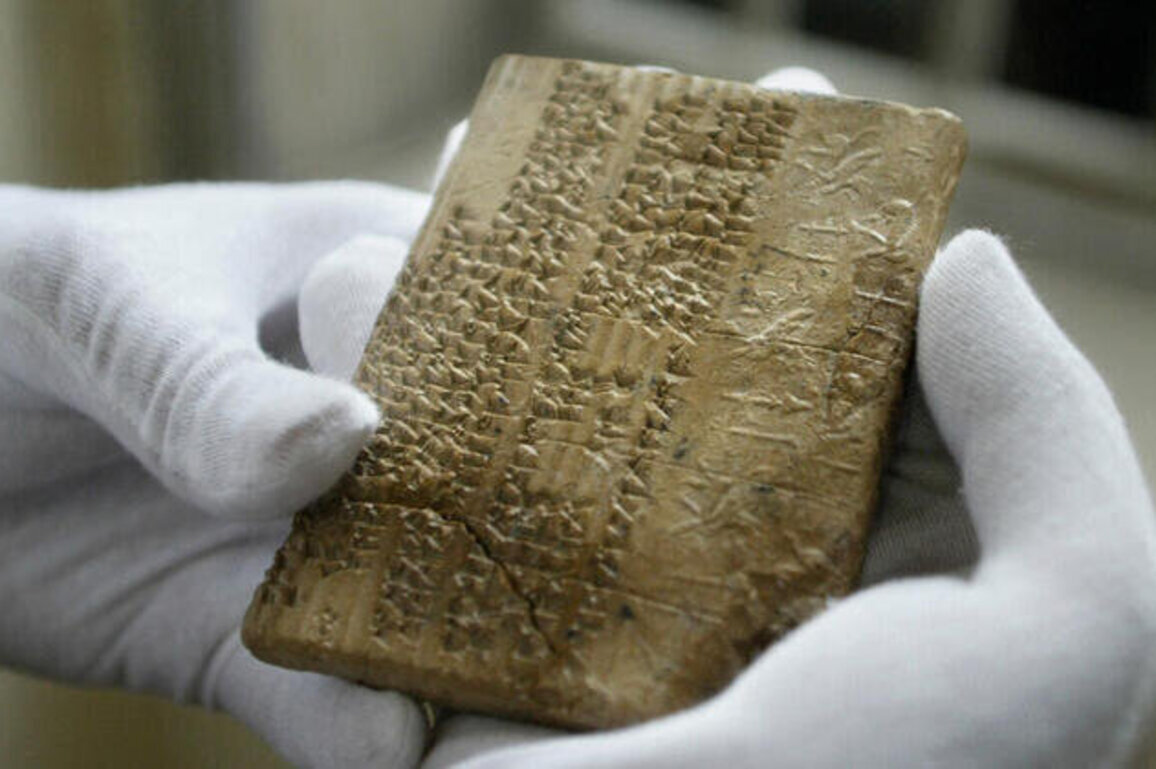
His quest: to decipher the 4,000-year-old writing system of Linear Elamite that had long been considered impossible to crack.
"Of all the writing systems used in Iran, the only one that is truly local developed within the territory we now call Iran is Linear Elamite," the 43-year-old told AFP, at his office atBelgium's University of Liege.
"All the others cuneiform, the Arabic alphabet, or the Greek alphabet were imported from the west."
Desset's fascination with the subject was sparked in 2006 when he participated in excavations in the south of Iran that unearthed tablets written in Linear Elamite.
Made up of 77 signs diamonds, curves, and other geometric patterns the writing system comes from the Bronze Age civilisation of Elam that long ago vanished from the region.
Rediscovered in 1903 by a French mission exploring the archaeological site of Susa, it had stumped experts who only had a handful of sources to work with.
For years after his "first physical encounter", Desset struggled in vain to make a breakthrough.
"There were so many dead ends," he said.
That changed though when he gained access to vases covered in the writing that were held by the Mahboubian collection inLondon, named after a family of Iranians living in exile.
"I was able to access ten new texts, and the key was in them," he recounted.
"The key to deciphering a script, as is so often the case, lies in proper names: names of places, gods, kings."
'Shilhaha'
Desset's work has seen him likened to Jean-Franois Champollion, the famed French philologist whodeciphered ancient Egyptian hieroglyphsat the start of the 19th century.
"What did it for Champollion, was the names of rulers, Ptolemy, Cleopatra ... He identified the symbols that recorded the names of their names," Desset explained.
"My Ptolemy was a ruler named Shilhaha, who reigned around 1950 BC."
Watch moreHieroglyphs and Egyptology: An enduring fascination
In a sequence of four symbols, he noticed that the last two were identical, a repetition that corresponded to the ending of the name "Shilhaha".
Following that breakthrough, Desset now has been able to work on 45 inscriptions.
Now with the expertise he has gained he wants to go back even further and start to work on tablets written in proto-Elamite, "some of the oldest written sources in the world".
But while Desset's research takes him back thousands of years in time, the dramas of the present conflict are inescapable.
Read more🌟The Bright Side: Ancient tomb complex discovered as Syria clears war rubble
At a time when US PresidentDonald Trumphasthreatened send Iran "back to the Stone Ages", Desset hopes that his work can help highlight the country's long and rich cultural history.
"I hope that this work will have a positive impact on Iranian culture and identity once things have returned to normal," he said.
(FRANCE 24 with AFP)
Originally published on France24