

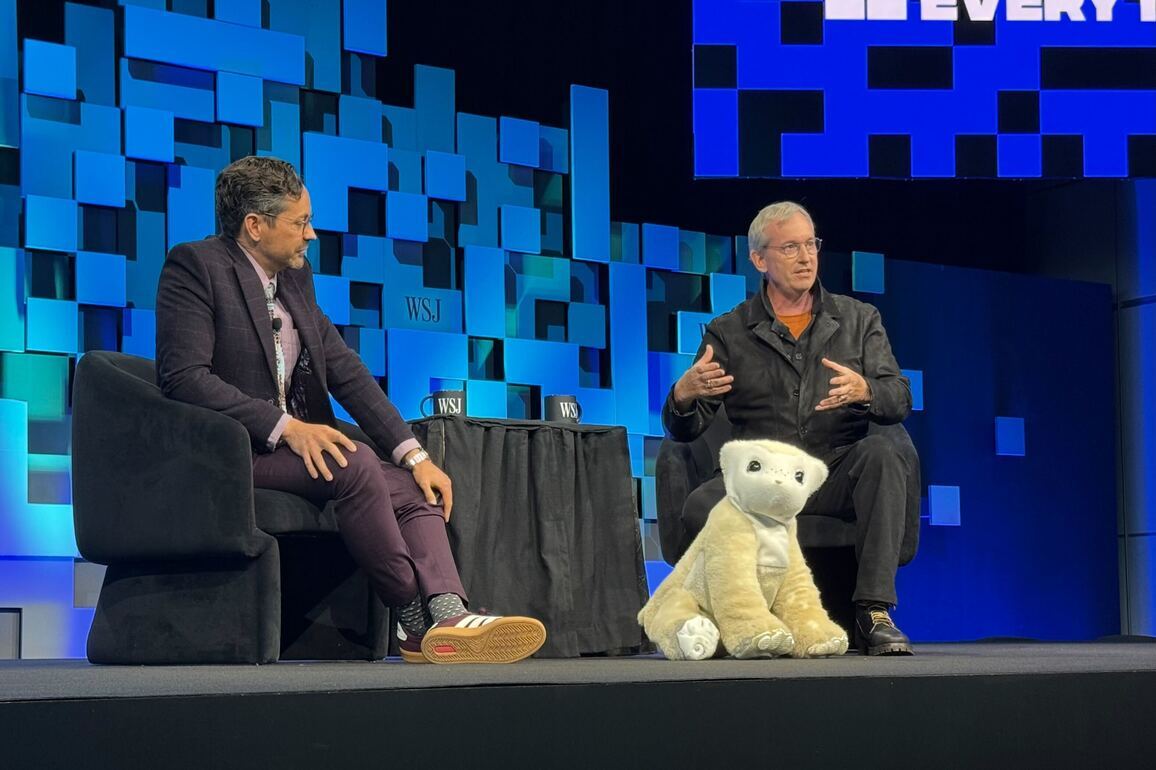
NEW YORK CITY, New York: A robotics pioneer behind the Roomba vacuum is now turning to a different kind of household companion—an artificial intelligence-powered robotic pet designed to interact, learn, and emotionally engage with users.
Colin Angle, former CEO of iRobot, unveiled a prototype called "Familiar," a four-legged robot created by his new startup Familiar Machines & Magic. The machine is designed to follow users around the home, respond to interaction, and adapt to daily routines.
"We chose a form factor that's not a human, not a dog, not a cat, because we wanted to steer away from all of those preconceptions," Angle said.
The plush, bulldog-sized robot features touch-sensitive surfaces, animal-like sounds, and AI-driven behavior that evolves. Unlike voice assistants, it does not speak, but it can process audio input and learn from user interactions, drawing on advances in generative AI similar to those behind tools like ChatGPT.
"The challenge is to make something that's not a watch-me toy," Angle said. "This is about having something that you want to hug, you want to pet. When it's happy, that makes you happy. And it is large enough or mobile enough to follow you to the kitchen or drag you off the couch and take a walk."
Angle said recent advances in AI made the project feasible. "I couldn't have done this six months ago," he said.
The idea of robotic pets is not new. Sony introduced its Aibo robotic dog in the late 1990s, but Angle believes the Familiar represents a significant step forward in emotional interaction and adaptability.
The company is targeting a range of users, including older adults who may want companionship without the responsibilities of caring for a live pet. "Not because people suddenly stop enjoying pets, but the fear and obligation of caring for them are such that people are very reluctant to get new pets at older ages," Angle said.
Familiar Machines has assembled a team of leading robotics experts, including Marc Raibert of Boston Dynamics and Cynthia Breazeal, known for developing socially interactive robots.
Experts say the success of such products will depend on how people perceive them. Maja Matarić, a pioneer in socially assistive robotics, said early reactions to the prototype were positive.
When she first encountered it, she said she "immediately got down on the ground near it and had to hug it and pet it, then started to play with it to see what it would do."
Matarić added that making robots feel approachable is critical. Research shows that machines seen as "cute, personalized and vulnerable" are more likely to be accepted, particularly in settings such as nursing homes or mental health care.
"Before generative AI, robots could not readily understand what people were saying," she said.