

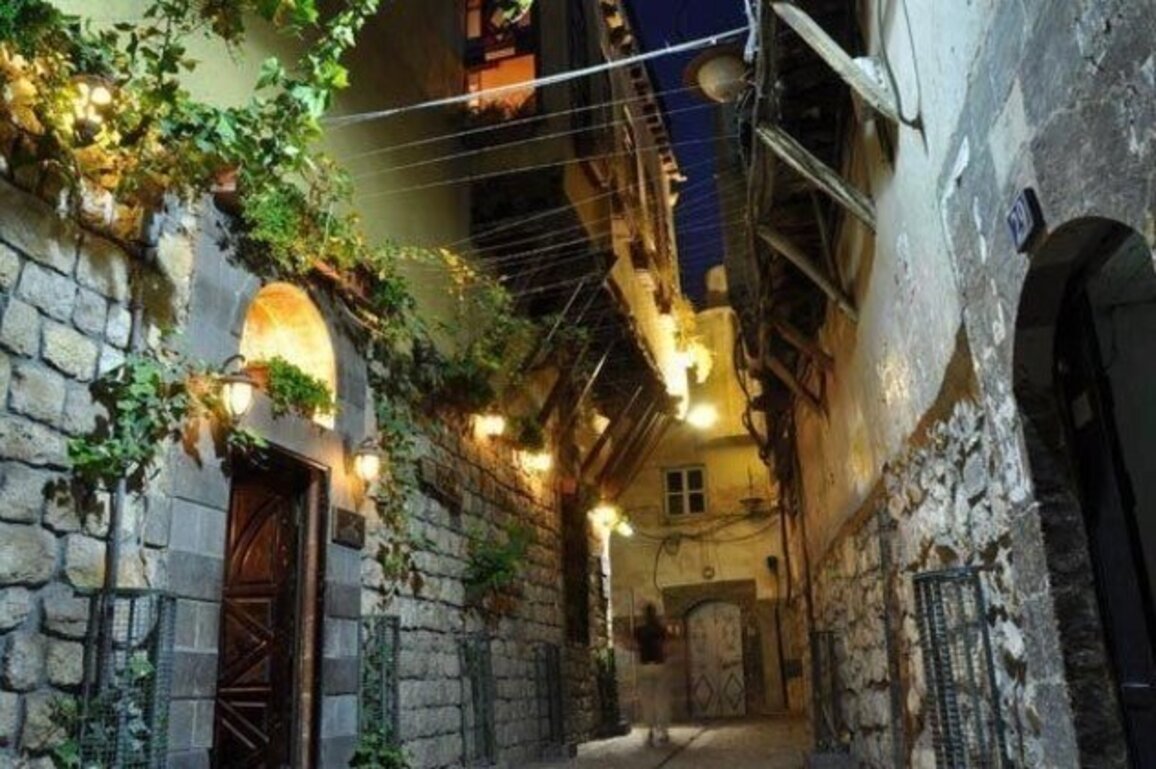
Damascus, (SANA)Kisan, Sharqi, Touma, al-Saghir, al-Jabiya, al-Faradis, and al-Farjthe names of the seven historic gates of Damascus, each carries centuries of stories. Armies marched through them, others departed and together they became the citys eternal guardians, each gate symbolically linked to a celestial body.
Damascus,the worlds oldest continuously inhabited city, has witnessed the rise and fall of civilizations, absorbing and blending cultures, traditions and influences. This rich interaction produced monuments, relics and architectural marvels that embody the citys unique heritage.
Throughout history, Damascus has been a coveted prize for invaders. To protect it, massive stone walls were set up during the Hellenistic era, with gates carved into them for entry and exit. In the Roman era, the fortifications were restored, and seven gates were establishedeach named after one of the seven known planets at that time.
The famed geographer Yaqut al-Hamawi wrote in his Dictionary of Countries that the first wall built on Earth after the Flood was the wall of Damascus. InRoman times, the citys western wall saw gates added and removed as the fortifications were renewed, with some sealed and others reopened. Today, several of these gates have disappeared, replaced by modern buildings, roads, or markets, yet their legacy endures.
The original Roman gates were tied to the seven planets: the Eastern Gate (Sun),Bab Touma(Venus), Bab al-Salam (Moon), Bab al-Jiniq (Moon), Bab al-Faradis (Mercury),Bab al-Jabiya(Jupiter), and Bab al-Saghir (Mars). Though some have vanished or changed, they remain the historical nucleus of Damascuss ancient entrances.
Bab Kisan
Located in the southeastern part of Damascus, is considered as one of the oldest gates of the city, dating back to the Roman era. Built in a strategic position overlooking the southern districts, the gate once bore the image of the planet Saturnassociated by theGreekswith the God of agriculture and time, and by the Romans with Cronus.
Bab Touma
One of the seven original gates of ancient Damascus, is located in the northeastern part of the city. First built during theRoman era, the gate is distinguished by its stone arch and two prominent balconies that once served for surveillance and defense. Engraved upon is the image of the planet Venus, which the Greeks associated with the goddess of love and beauty, while the Romans linked it to Aphrodite.
Bab Sharqi (Eastern Gate)
Situated on the eastern side of Damascus, served as one of the citys main entrances. Its location near the famous Damascus markets, including the renowned Souq al-Hamidiyah, made it a vital passageway. Named after the eastern direction it faces, the gate is celebrated for its traditional Damascene architecture, adorned with elegant stone arches. It carried the image of the sun, linked by the Greeks to the God Helios and by the Romans to Sol.
Bab al-Saghir (Small Gate)
Found in the southwestern quarter, earned its name as the smallest of Damascuss gates. Despite its size, it held strategic importance, connecting the old city with newer districts. The gate was marked with the image of Mars, reflecting its symbolic association, and its name simply denotes its modest dimensions compared to the other gates along the city wall.
Bab al-Jabiya
Is one of the important gates of the city of Damascus, located on its western side. It was used as a main passageway for trade caravans coming from the regions of Aleppo, Jordan, and Palestine. The gate was named Bab al-Jabiya in reference to the "jabaya" or markets that were held in the nearby area, and it bore the image of the planet Jupiter. It was given this name because it led to a camp designated for collecting taxes.
Bab al-Farads (Gate of Paradise)
located on the southern side of theOld city of Damascus,takes its name from paradise, a reflection of Damascuss long-standing reputation as the Garden of Earth for its beauty and lush nature. Historically, the gate is believed to have served as an entrance to the quarters of the citys wealthy and noble families. Engraved upon it was the image of the planet Mercuryrepresented in Greek mythology by Hermes, the messenger god, and in Roman tradition by Mercury. The gate stands at the entrance to the al-Amara neighborhood, marking a passage steeped in symbolism and history.
Bab al-Janiq
Situated between Bab al-Salam and Bab Tuma, is symbolically linked to the moon. InGreek mythology, it was represented by the goddess Selene, later identified with Artemis, the goddess of the hunt. Among the Romans, it corresponded to Luna, the goddess of the moon, while theByzantinesrenamed it the Gate of the Nativity in commemoration of the birth of Jesus Christ. It is one of the northern gates of the city wall.
The number of gates on the northern side of Damascus is bigger than in other directions. This was due to the low likelihood of attacks from that side, thanks to the natural protection provided by the water channels of the Barada River and its branches (al-Aqrabani and al-Daiyani), as well as the difficult terrain formed by the slopes of Mount Qasioun.
Gates of Damascuss inner neighborhoods (small gates)
It is also essential to highlight the gates of Damascuss inner neighborhoods, such as Bab Srija, Bab Zuqaq al-Burghul, and Bab Musalla, which were built to protect the citys old quarters.
Bab Srijawas not one of the seven main gates surrounding Old Damascus; rather, it served as a protective entrance for a district located outside the ancient city walls.
Bab Zuqaq al-Burghul lies in the Souq al-Niswan inside Bab al-Jabiya, between the Cotton Market and al-Badawi Street. The gate consists of a large wooden door reinforced with metal plates and nails, and within it a smaller, low passage known as Bab Khokha. This smaller door was opened at night to allow pedestrians through when the main gate was closed. Anyone passing through had to bow their head to fit, as the passage was narrow and low, permitting only one person at a time. The name Zuqaq al-Burghul likely stems from its connection to the bulgur trade at the timeperhaps a market for selling it once stood there, or a mill for grinding it operated nearby.
Bab al-SalihiyahNamed after the village of al-Salihiyah on the southern slopes of Mount Qasioun, this gate reflects the expansion of Damascus beyond its ancient walls.
Bab Ayn al-KurshA historic neighborhood outside the old city, Bab Ayn al-Kursh derived its name from a small spring once located near the al-Ward Mosque. Entry to the area traditionally required a Syrian qirsh coin, giving the gate its distinctive identity. Known for its layered history and close ties with districts such as Sarouja, the neighborhood preserves echoes of place names that have since faded with time.
Iman al-Zouheiri/ Mazen Eyon